 Proudly Canadian
Appliance repair in Canada: diagnosis, parts, and knowing when to replace
CentFix
Updated regularly · Canada-wide
The real question in appliance repair is rarely whether something can be fixed, it is whether fixing it is the right call. Parts availability, the age of the machine and the cost of the specific failure decide that, and this guide covers how technicians approach it and what you should expect from a repair visit.
CentFix is a matching service. You describe the job once and we connect you with independent appliance repair companies who serve your address. Licensing, insurance, warranties and reviews belong to the individual businesses that earned them. We route the request, they do the work.
Everything below applies to homes across Canada. It covers scope, what pushes a price up or down, realistic timelines, the rules that apply, seasonal factors, and the questions worth asking before anyone starts.
What appliance repair actually includes
Most residential appliance work covers refrigeration, laundry, cooking and dishwashing. Refrigerators bring compressor, sealed system, defrost and control faults. Washers bring pumps, bearings, door locks and control boards. Dryers are heating elements, thermostats, belts and, very often, restricted venting rather than a fault in the machine at all.
Ovens and cooktops involve elements, igniters, thermostats and control boards, with gas appliances requiring a licensed gas technician for anything on the fuel side. Dishwashers fail at pumps, valves, seals and drainage, and a surprising share of complaints turn out to be drain or supply issues outside the machine.
A proper visit starts with diagnosis rather than parts. Good technicians test before they replace, because swapping a control board on a symptom that came from a failed sensor is an expensive way to be wrong.
- Refrigerator and freezer repair, including cooling and defrost faults
- Washer and dryer repair, including drainage, heating and vent restriction
- Oven, range and cooktop repair, electric and gas
- Dishwasher repair, including pumps, valves and leaks
- Control board diagnostics and sensor replacement
- Installation and hookup of replacement appliances
What drives appliance repair costs up or down
Nearly every repair splits into three parts: the diagnostic call, the component, and the labour to fit it. The diagnostic fee is standard in this trade and is frequently credited toward the repair if you proceed.
The part itself is the variable. A thermostat, valve or pump is modest. A sealed-system refrigeration repair or a main control board on a premium brand can approach the cost of a new appliance, which is exactly the point where the replace conversation starts.
Brand affects both price and availability. Parts for common brands are usually stocked locally, while some imported and high-end models involve ordering, which adds a return visit and time.
- Diagnostic fee, and whether it is credited toward the repair
- Cost and availability of the specific part
- Brand, with some premium and imported models costing considerably more
- Whether the fault requires sealed-system or gas-certified work
- Labour time, and whether the appliance must be pulled out or partly dismantled
- A second visit if the part has to be ordered
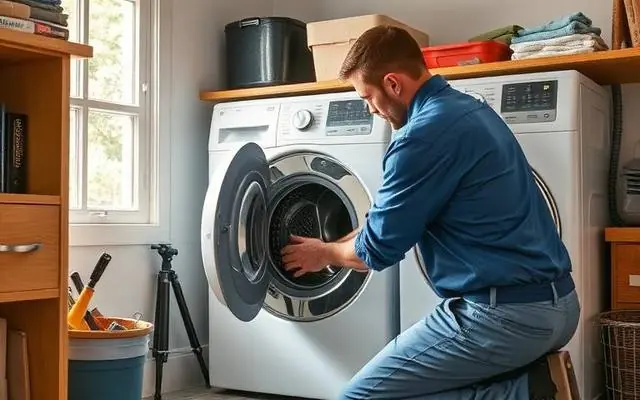
Describe the job once and independent appliance repair companies who service your address will come back with quotes you can compare.
How long appliance repair work takes, and how soon someone can come
Most repairs are booked within a few days, and refrigeration failures are usually prioritised because food is at stake. A typical visit runs one to two hours.
Where a part must be ordered, expect several days to a couple of weeks depending on brand. Asking whether the part is in stock at the time of booking saves a lot of frustration.
How to choose the right appliance technician
Ask whether the technician services your brand and whether they have parts access for it. Not every company works on every make, particularly at the premium end.
Get the replace-versus-repair conversation on the table early. An honest technician will tell you when a repair does not make economic sense on a fifteen-year-old machine, and that advice is worth the diagnostic fee on its own.
- Diagnostic fee disclosed before booking and whether it is credited
- Experience with your specific brand
- Warranty on parts and labour, and its length
- Licensing for gas appliances where applicable
- Whether they will quote the repair before proceeding
Questions to ask before you hire a appliance technician
Nobody expects you to know the trade. These questions are the ones that separate a company that has thought the job through from one that is guessing on the phone.
- What is your diagnostic fee, and is it applied to the repair?
- Do you service this brand, and can you get parts for it?
- What is the fault, and what caused it?
- Given the age of this appliance, is repair worth it?
- What warranty comes with the part and the labour?
- Is the part in stock, or will this need a second visit?
Tell us what the job involves and compare quotes from appliance repair companies nearby. It costs you nothing.
Permits, rules and who is allowed to do the work
Gas appliances are the licensed exception. Anything touching the gas connection on a range, dryer or other gas appliance requires a licensed gas technician, and the requirement applies in every province.
Appliances still within manufacturer warranty should generally go through the brand's authorised service network. An independent repair can void remaining coverage, so check the purchase date before booking.
Electrical work beyond the appliance itself, such as a dedicated circuit or a receptacle that keeps tripping, belongs to a licensed electrician rather than an appliance technician.
Seasonal timing and Canadian conditions
Refrigeration calls rise in summer heat, when marginal systems that coped in winter stop keeping up. Dryer complaints cluster in winter, partly because vents ice up and partly because the machines run more.
Holiday periods bring a surge in oven and dishwasher calls for obvious reasons, and availability tightens right when people need it most. If your oven has been unreliable, October is a better month to deal with it than December.
Common mistakes that cost homeowners money
The frequent mistake is replacing parts by guess, either through online advice or a technician who does not test first. The second is ignoring maintenance that would have prevented the failure entirely, which is most of what kills dryers.
- Ordering parts based on a forum diagnosis rather than testing
- Ignoring a restricted dryer vent and blaming the machine
- Overloading washers, which is what destroys bearings and pumps
- Repairing an old appliance where the cost approaches replacement
- Using an independent technician while the manufacturer warranty is still active
Getting the longest life out of the work
Appliance lifespan responds well to a few small habits. Most of the failures technicians see repeatedly are the result of restricted airflow, blocked filters, or the machine being asked to do more than it was built for.
- Clean the dryer lint filter every load and the vent duct annually
- Vacuum refrigerator condenser coils twice a year
- Clean the dishwasher filter monthly and run a cleaner cycle periodically
- Check washer hoses for bulging and replace them every few years
- Level appliances properly, since vibration causes most premature wear
Where CentFix fits in
CentFix is not a appliance repair company. We do not send crews, set prices or hold the warranty. What we do is take one clear description of your job and put it in front of independent appliance repair companies who already work in your area, so you get several real quotes instead of spending an afternoon leaving voicemails.
Homeowners never pay us. The professionals you hear from run their own businesses, carry their own licensing and insurance, and stand behind their own work. Read what comes back, ask follow-up questions, and hire the one whose answers make sense to you.