 Proudly Canadian
Junk removal in Canada: how pricing works and what happens to your stuff
CentFix
Updated regularly · Canada-wide
Junk removal looks like a simple service and mostly is, but the price differences between companies come down to two things people rarely ask about: how volume is measured and where the material actually ends up. This guide covers both, along with what cannot be taken and how to keep the cost down.
CentFix is a matching service. You describe the job once and we connect you with independent junk removal companies who serve your address. Licensing, insurance, warranties and reviews belong to the individual businesses that earned them. We route the request, they do the work.
Everything below applies to homes across Canada. It covers scope, what pushes a price up or down, realistic timelines, the rules that apply, seasonal factors, and the questions worth asking before anyone starts.
What junk removal actually includes
The standard service is full-service removal: a crew arrives, loads everything from wherever it sits, sweeps up and hauls it away. You do not carry anything to the curb, which is the main reason people book it rather than renting a bin.
Bin or dumpster rental is the alternative model, where a container is dropped off, you fill it over a few days, and it is collected. It costs less per volume for large renovation projects but the labour is yours.
Most companies sort what they collect. Usable furniture goes to donation partners, metal to scrap, electronics to e-waste programs and clean wood or drywall to construction recycling where facilities exist. What is left goes to landfill, and the proportion varies widely by company.
- Household clear-outs, basements, garages and attics
- Furniture, mattresses and appliance removal
- Estate and downsizing clear-outs
- Renovation and construction debris
- Yard waste, deck and fence material
- Office and small commercial cleanouts
What drives junk removal costs up or down
Volume in the truck is the main measure, usually charged in fractions of a load. That is why a compact pile of dense material can cost less than a bulky but light one, and why breaking down furniture before the crew arrives can genuinely lower the price.
Labour adds where access is hard. A third-floor walk-up, a tight basement stairwell, or items that need dismantling take longer than a driveway pile and are priced accordingly.
Disposal fees are the third element. Mattresses, tires, appliances containing refrigerant, electronics and hazardous material all carry specific handling costs at the facility, and reputable companies pass those on transparently rather than hiding them.
- Volume the load occupies in the truck
- Access, stairs, distance to the vehicle and whether items must be dismantled
- Specific disposal fees for mattresses, appliances, electronics and tires
- Weight-heavy material such as concrete, soil and shingles
- Whether you have consolidated items into one place beforehand
- Same-day or weekend scheduling
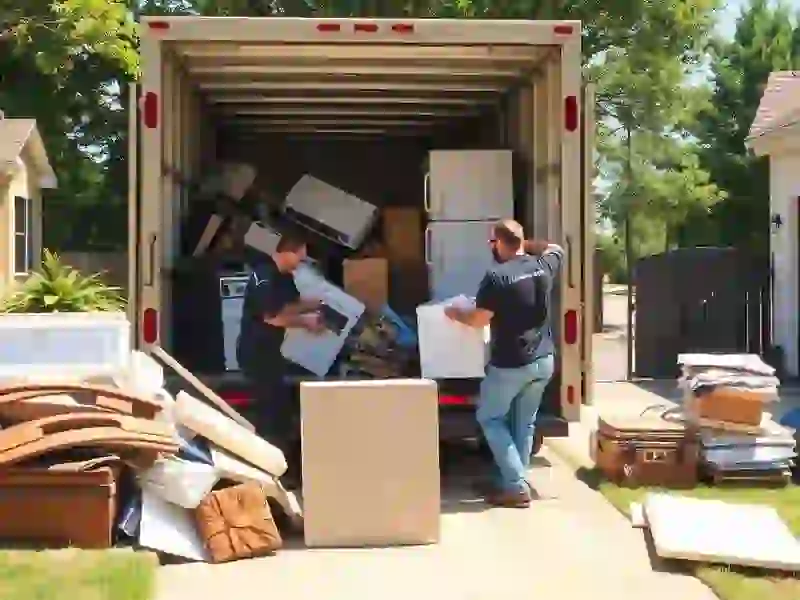
Describe the job once and independent junk removal companies who service your address will come back with quotes you can compare.
How long junk removal work takes, and how soon someone can come
Most jobs are booked within a day or two, and many companies offer same-day service when their schedule allows. A typical single-room or garage clear-out takes an hour or two on site.
Large clear-outs, estates and full-house cleanouts can take most of a day and sometimes multiple truckloads. If you are working to a closing date or a move-out deadline, book earlier, because the end of the month is the busiest period in this trade.
How to choose the right junk removal crew
Ask how the quote is calculated and whether it is final. Volume-based pricing is standard and fair, but the estimate should be confirmed before loading starts rather than presented as a surprise at the end.
If diversion matters to you, ask specifically what proportion goes to donation and recycling and where. Companies that genuinely sort can name their partners and facilities.
- Liability insurance covering damage during removal
- A clear volume-based quote confirmed on site before loading
- What they will not take, so there are no surprises
- Where donatable and recyclable material actually goes
- Whether sweep-up after loading is included
Questions to ask before you hire a junk removal crew
Nobody expects you to know the trade. These questions are the ones that separate a company that has thought the job through from one that is guessing on the phone.
- How is the price calculated, and is it confirmed before you start loading?
- What items cost extra to dispose of?
- Is there anything on my list you cannot take?
- Do you donate or recycle, and where does that material go?
- Do you sweep up afterwards?
- Would a bin rental be cheaper for this volume?
Tell us what the job involves and compare quotes from junk removal companies nearby. It costs you nothing.
Permits, rules and who is allowed to do the work
Hazardous material is the main restriction. Paint, solvents, chemicals, propane tanks, asbestos and medical waste are generally not accepted by standard junk removal and must go to designated municipal or provincial facilities.
Appliances containing refrigerant require certified handling before disposal, which is why fridges and air conditioners carry an extra fee. Companies that take them without mention are worth a second question.
Electronics are handled under provincial recycling programs in most of the country, and reputable companies route them accordingly rather than to landfill.
Seasonal timing and Canadian conditions
Spring cleaning and the end of the school year drive the busiest booking periods, along with month-end moves throughout the year. Autumn brings garage and yard clear-outs before winter.
Winter slows demand, which usually means easier scheduling. Access can be the limiting factor if a truck cannot get close to the house through snow.
Common mistakes that cost homeowners money
The main way people overpay is by treating the truck as the sorting facility. Anything you can donate, sell, or put out with municipal collection is volume you are not paying to remove.
- Paying to haul away items municipal collection would take for free
- Not consolidating items before the crew arrives
- Assuming hazardous material will be accepted
- Booking at month-end without lead time when you have a deadline
- Accepting a phone estimate that was never confirmed on site
Getting the longest life out of the work
Clear-outs stay cleared when there is somewhere for things to go. A small routine beats another full truck in three years.
- Set a donation drop-off habit rather than storing items indefinitely
- Deal with renovation debris as each phase finishes, not at the end
- Keep hazardous materials separate and take them to the proper facility
- Check municipal bulk collection dates before booking a paid removal
- Photograph valuable items before an estate clear-out for records
Where CentFix fits in
CentFix is not a junk removal company. We do not send crews, set prices or hold the warranty. What we do is take one clear description of your job and put it in front of independent junk removal companies who already work in your area, so you get several real quotes instead of spending an afternoon leaving voicemails.
Homeowners never pay us. The professionals you hear from run their own businesses, carry their own licensing and insurance, and stand behind their own work. Read what comes back, ask follow-up questions, and hire the one whose answers make sense to you.