 Proudly Canadian
Pest control in Canada: common pests, treatment plans and keeping them out
CentFix
Updated regularly · Canada-wide
Spraying is the visible part of pest control and the least important. What decides whether a problem returns is exclusion, sanitation and follow-up, and this guide covers how each of the common Canadian pests is actually dealt with, along with what a proper treatment plan should contain.
CentFix is a matching service. You describe the job once and we connect you with independent pest control companies who serve your address. Licensing, insurance, warranties and reviews belong to the individual businesses that earned them. We route the request, they do the work.
Everything below applies to homes across Canada. It covers scope, what pushes a price up or down, realistic timelines, the rules that apply, seasonal factors, and the questions worth asking before anyone starts.
What pest control actually includes
Rodents are the most common winter complaint. Effective control combines trapping or baiting with sealing entry points, since mice fit through gaps smaller than most people believe. A treatment without exclusion just creates a vacancy for the next ones.
Insects vary by species and season. Ants need the nest treated rather than the trail, and carpenter ants indicate moisture in wood somewhere. Wasps and hornets are treated at the nest, best at dusk. Cockroaches need baiting and repeated visits because of their reproductive cycle.
Bed bugs are their own discipline: multiple treatments, preparation by the occupant, and often heat treatment alongside chemical application. Wildlife such as raccoons, squirrels and bats requires humane removal and one-way exclusion, and in many places is regulated separately from insect control.
- Rodent control, trapping and entry point exclusion
- Ant treatment, including carpenter ants and nest location
- Wasp, hornet and stinging insect nest removal
- Cockroach and stored product pest programmes
- Bed bug treatment, chemical and heat
- Wildlife exclusion for raccoons, squirrels and bats
What drives pest control costs up or down
The pest itself sets the baseline. A single wasp nest is a short visit. A bed bug treatment is a multi-visit programme with preparation requirements, and it is priced accordingly.
Infestation level and property size follow. A problem caught early costs a fraction of one that has spread through a building, which is the strongest argument for calling at the first sign rather than the third month.
Exclusion work is often the largest line and the one that actually solves it. Sealing entry points, screening vents and repairing soffits takes labour and materials, and skipping it is the reason some homes are treated year after year.
- Species and how difficult it is to eradicate
- Extent of the infestation and how long it has been present
- Property size and the number of areas requiring treatment
- Number of follow-up visits included in the plan
- Exclusion and repair work to seal entry points
- Whether heat treatment or specialised equipment is required
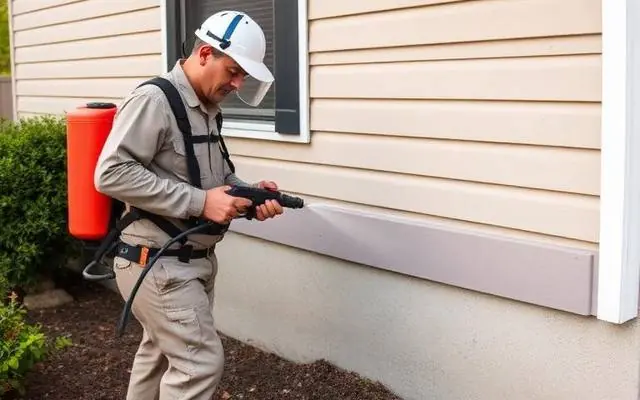
Describe the job once and independent pest control companies who service your address will come back with quotes you can compare.
How long pest control work takes, and how soon someone can come
Wasp nests and single-issue visits are often handled the same week and take under an hour. Rodent programmes typically involve an initial visit plus follow-ups over several weeks.
Bed bugs take the longest: multiple treatments spaced by the life cycle, usually across four to six weeks, with occupant preparation before each. Wildlife exclusion depends on the season, since removal is avoided while dependent young are present.
How to choose the right pest control technician
Ask what the plan is beyond the first spray. Companies that inspect, identify the entry points, and schedule follow-up are the ones whose work holds. Those who quote a single visit for a rodent problem are selling a pause.
Confirm licensing. Pesticide application is provincially regulated and requires a licensed applicator, and reputable companies produce that without hesitation.
- Provincial pesticide applicator licence and company insurance
- Written inspection findings and a treatment plan, not just a price
- Whether exclusion work is included or quoted separately
- Number of follow-up visits and any guarantee period
- Safety instructions for children, pets and food areas
Questions to ask before you hire a pest control technician
Nobody expects you to know the trade. These questions are the ones that separate a company that has thought the job through from one that is guessing on the phone.
- What pest is this, and how did you confirm it?
- Where are they getting in, and is sealing that included?
- How many visits will this take, and over what period?
- What do I need to do to prepare, and what is the re-entry time?
- Is there a guarantee if they come back?
- What products are you using, and are they safe around pets?
Tell us what the job involves and compare quotes from pest control companies nearby. It costs you nothing.
Permits, rules and who is allowed to do the work
Pesticide use is provincially regulated, and commercial application requires a licensed applicator. Several provinces also restrict cosmetic pesticide use, which affects what products can legally be applied and where.
Wildlife is protected under provincial regulations. Removal of raccoons, squirrels and bats must be humane, and there are restricted periods when dependent young are present, during which exclusion rather than removal is the appropriate approach.
In rental housing, responsibility for pest treatment is usually the landlord's under provincial tenancy legislation, particularly where the infestation affects habitability.
Seasonal timing and Canadian conditions
Rodents move indoors as temperatures drop, making late autumn the peak season for mice and the best time to seal entry points before they find them.
Spring brings ants and the start of wasp colonies, with wasp nests reaching their largest and most aggressive in late summer. Bat exclusion is restricted during the maternity season, so timing matters there more than most people expect.
Common mistakes that cost homeowners money
The pattern that keeps homes on annual treatment is dealing with the population and ignoring the access. Sealing gaps is unglamorous and it is what ends the problem.
- Treating without sealing the entry points
- Using retail sprays on cockroaches or bed bugs, which scatters them further
- Ignoring the moisture problem that attracted carpenter ants
- Skipping follow-up visits once the visible activity stops
- Removing wildlife during the season when young are still dependent
Getting the longest life out of the work
Prevention in this trade is genuinely effective, and most of it is ordinary building maintenance combined with not leaving food available.
- Seal gaps around pipes, vents, foundation and door sweeps before autumn
- Keep firewood, compost and dense vegetation away from the walls
- Store food and pet food in sealed containers
- Fix moisture problems, which attract both insects and the pests that eat them
- Inspect soffits, roof vents and chimney caps annually for wildlife access
Where CentFix fits in
CentFix is not a pest control company. We do not send crews, set prices or hold the warranty. What we do is take one clear description of your job and put it in front of independent pest control companies who already work in your area, so you get several real quotes instead of spending an afternoon leaving voicemails.
Homeowners never pay us. The professionals you hear from run their own businesses, carry their own licensing and insurance, and stand behind their own work. Read what comes back, ask follow-up questions, and hire the one whose answers make sense to you.