Proudly Canadian
Whole Home Water Filter System in Canada: what's involved, what it costs, and how to hire
CentFix
Updated regularly · Canada-wide
If you're looking into whole home water filter system, you probably want three things answered: what the work actually involves, what it's likely to cost, and how soon someone can get to it. This guide covers all three in plain language so you can have a useful conversation with a plumber instead of a guessing match over the phone.
CentFix is a matching service. You describe the job once and we route it to independent professionals who serve your address. Licences, insurance, warranties and reviews belong to the individual businesses that earned them, we connect you, they do the work.
Everything below applies across Canada and reflects how water treatment work is normally handled in houses, condos and small commercial properties, including the seasonal and code realities that shape the job here.
What whole home water filter system involves
Treatment starts with testing. Before specifying anything, a competent installer wants to know hardness, iron and manganese levels, pH, total dissolved solids, and for well supply, a bacteriological result. Whole Home Water Filter System without a test is guesswork, and it's the reason so many homes end up with equipment that solves a problem they never had.
Systems fall into two groups. Point-of-entry equipment treats everything coming into the house: sediment filtration, water softening for hardness, carbon for chlorine and taste, iron or sulphur removal, and UV disinfection where bacteria are a risk. Point-of-use equipment treats one tap, usually an under-sink carbon filter or a reverse osmosis unit for drinking and cooking water.
Installation is real plumbing, not an appliance drop-off. It needs a properly placed tie-in on the main after the shutoff, bypass valves so the house still has water during servicing, a drain connection for units that backwash or reject water, an electrical supply for controls and UV, and enough clearance to change cartridges and media without dismantling the room.
- Water test covering hardness, iron, pH and bacteria where relevant
- Whole-home versus point-of-use recommendation
- Tie-in location, bypass valves and shutoffs
- Drain connection for backwash or RO reject water
- Electrical supply for controls and UV
- Access for cartridge, media and lamp changes
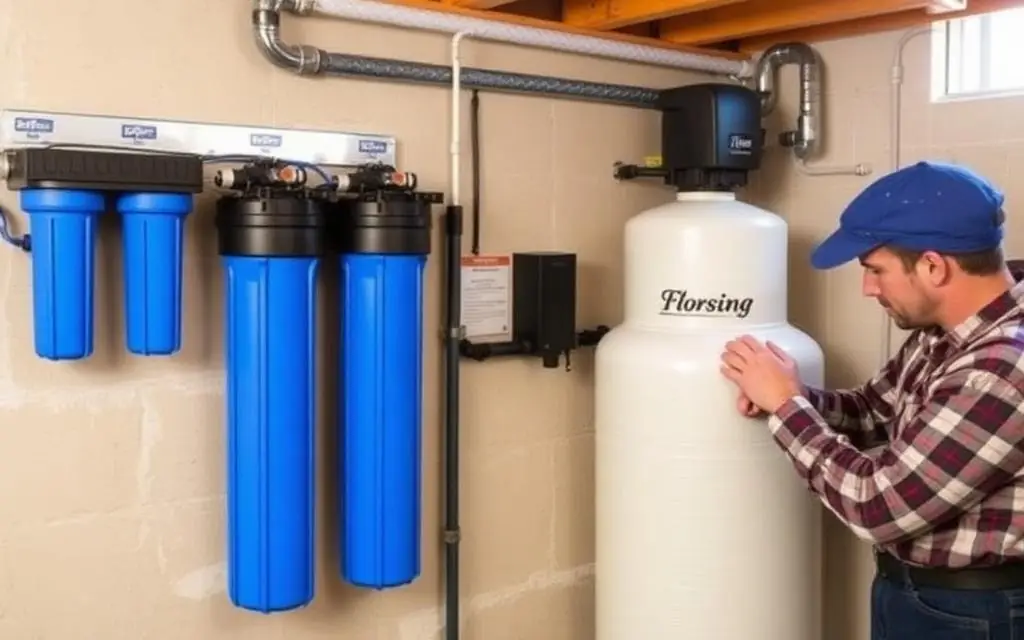
Compare quotes for whole home water filter system from installers who test before they sell.
Matching the system to the problem
Hard water leaves scale on kettles and shower glass, shortens water heater life and makes soap perform badly. That's a softener's job, ion exchange with periodic brine regeneration. A carbon filter will not soften water, whatever the marketing says.
Taste and odour from chlorine or chloramine is carbon's territory, either whole-home or at the tap. Rotten-egg smell is usually hydrogen sulphide and needs oxidation or specialised media. Orange staining is iron; black staining is manganese. Cloudiness and grit are sediment, handled by a pre-filter that also protects everything downstream.
Well water adds a category municipal supply doesn't: microbiological risk. UV disinfection is the standard answer, and it depends on clear water to work, so it always sits behind sediment and often behind iron removal. Testing at least annually is the recommendation from most provincial health authorities for private wells.
What drives the cost of whole home water filter system
Scope sets the price band. An under-sink filter is a short visit. A softener is a straightforward install where a drain and outlet are nearby. A multi-stage whole-home train with sediment, iron removal, softening, carbon and UV is a mechanical-room project with several tie-ins and considerably more labour.
Site conditions matter next. If there's no drain within reach of the equipment location, one has to be run. If there's no outlet, an electrician is involved. If the main is in a crawl space or a tight utility closet, everything takes longer. Well systems may also need pressure tank or pump work at the same time.
Then there's ongoing cost, which buyers routinely underestimate. Cartridges, softener salt, media replacement every several years, UV lamps annually, and RO membranes on their own schedule. Ask for the annual running cost in writing alongside the install price, it's the honest way to compare two systems.
- Point-of-use versus whole-home, and number of stages
- Water test results and the media required
- Drain and electrical availability at the install location
- Access and space in the mechanical area
- Consumables: cartridges, salt, media, UV lamps, membranes
Installation, commissioning and upkeep
An under-sink unit takes one to two hours. A softener or single whole-home filter is typically a half day. A multi-stage system with new drain and electrical can take a full day or two. Water is off for part of the install.
Commissioning matters as much as installation. The system should be flushed, the softener programmed to your measured hardness rather than a default, the UV given time to reach output, and the whole house checked for leaks under pressure. Ask for a post-install test to confirm the equipment is actually doing what it was bought to do.
Set reminders for consumables the day it's installed. A neglected filter is worse than no filter: loaded carbon can shed what it captured, a UV lamp past its rated hours still glows but no longer disinfects, and a softener out of salt quietly stops working.
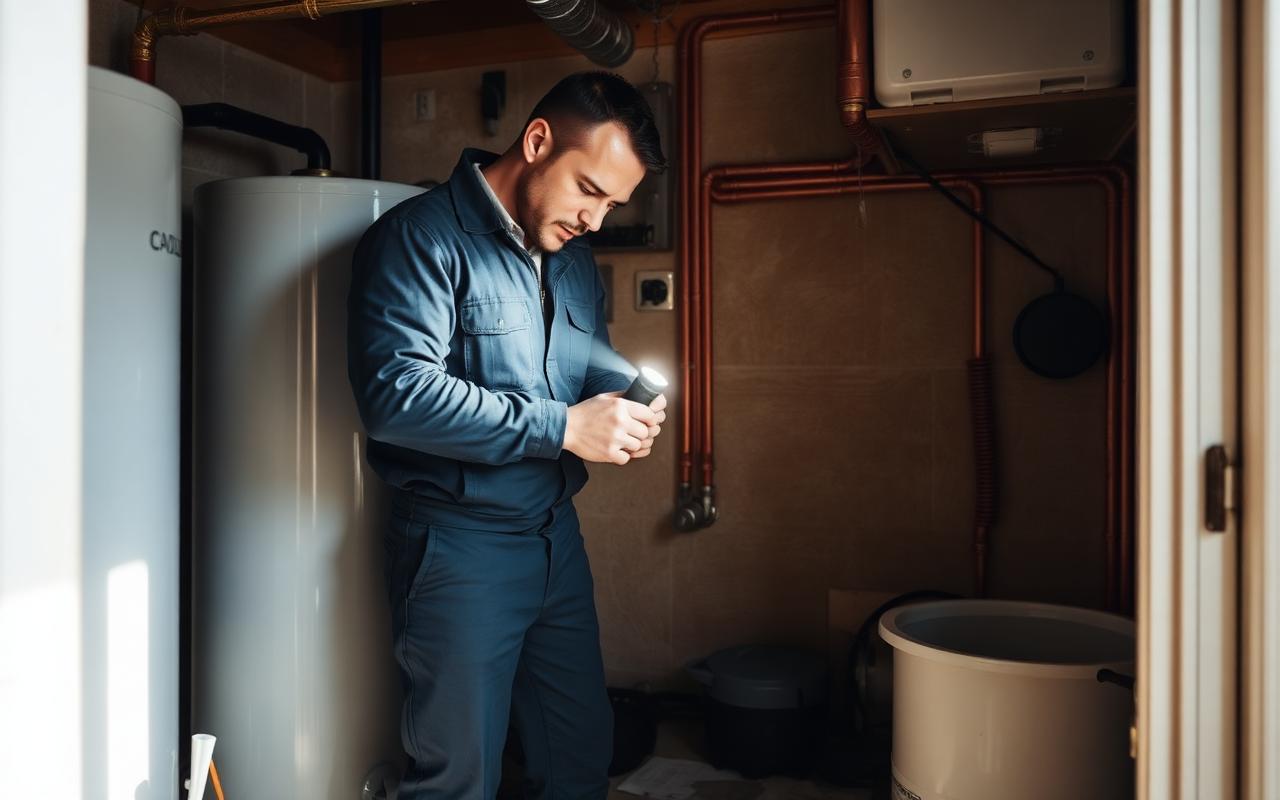
Choosing an installer
Be direct about testing. Ask what they'll test, whether it's done on site or sent to a lab, and whether you get the results. A specialist who provides numbers and explains what each one means is worth more than one who leads with a package price.
Check certification of the equipment itself, look for NSF/ANSI standards relevant to the claim being made, and be cautious with performance promises that aren't tied to a standard. Confirm who services the system afterwards and what a service visit costs.
- Water test performed and results shared with you
- Equipment certified to relevant NSF/ANSI standards
- Bypass valves fitted so servicing doesn't shut the house down
- Written annual running cost for consumables
- Service availability and warranty terms
Describe your water once and get quotes back from local installers.