Proudly Canadian
Backup Sump Pump Installation in Canada: what's involved, what it costs, and how to hire
CentFix
Updated regularly · Canada-wide
If you're looking into backup sump pump installation, you probably want three things answered: what the work actually involves, what it's likely to cost, and how soon someone can get to it. This guide covers all three in plain language so you can have a useful conversation with a plumber instead of a guessing match over the phone.
CentFix is a matching service. You describe the job once and we route it to independent professionals who serve your address. Licences, insurance, warranties and reviews belong to the individual businesses that earned them, we connect you, they do the work.
Everything below applies across Canada and reflects how pump and flood-prevention work is normally handled in houses, condos and small commercial properties, including the seasonal and code realities that shape the job here.
What backup sump pump installation includes
A pump system is more than the pump. Backup Sump Pump Installation normally covers the pit and its lid, the pump itself, the check valve, the discharge line and where it terminates, the float or electronic switch, the dedicated electrical circuit, and any backup arrangement. A weakness in any one of those puts the whole system out on the day it's needed.
Sizing is done by head height and flow, not by horsepower alone. The pump has to lift water from the pit to the discharge point and push it far enough from the foundation that it doesn't simply return through the weeping tile. Undersized pumps run constantly and burn out; oversized ones short-cycle and wear the switch.
Backup matters because the storms that flood basements are the same storms that cut power. A battery backup pump with its own float takes over automatically and typically runs for several hours. A water-powered backup uses municipal supply pressure and runs indefinitely but needs adequate pressure and is not permitted everywhere. Alarms and monitoring are inexpensive and tell you about a failure before the carpet does.
- Pit condition, depth and sealed lid
- Pump capacity matched to head height and inflow
- Check valve and correctly sized discharge line
- Discharge point far enough from the foundation, above grade in winter
- Battery or water-powered backup and a high-water alarm
- Dedicated GFCI-protected circuit
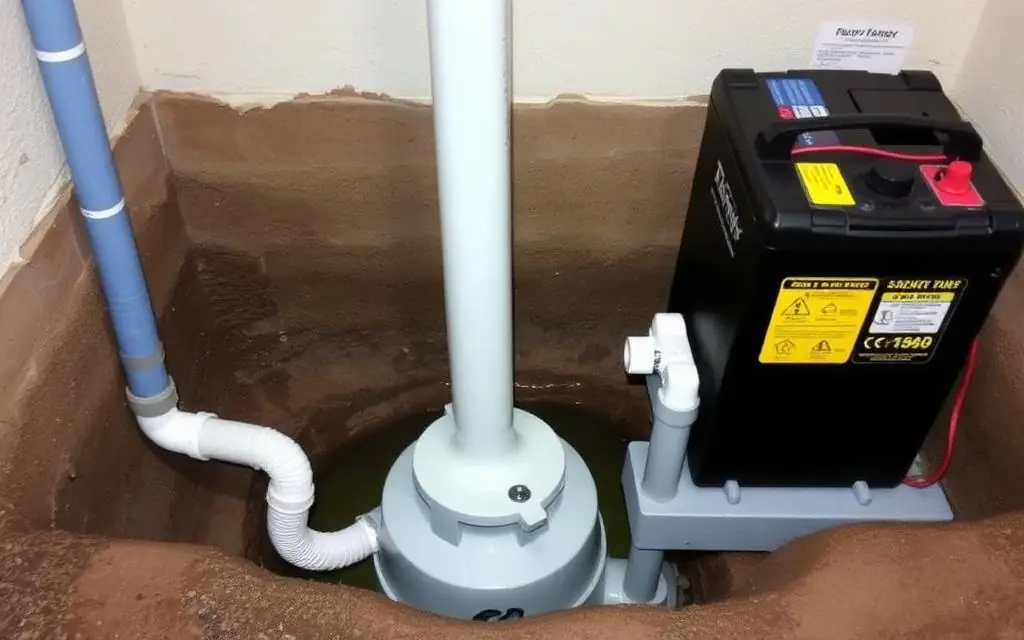
Compare quotes for backup sump pump installation from plumbers who work in your area.
Signs a pump is heading for failure
Noise changes first. Grinding, rattling or a loud hum without water moving usually means the impeller or the motor bearings. Cycling patterns change next: a pump that runs every couple of minutes in dry weather has a switch problem, a stuck check valve returning water, or groundwater entering that it shouldn't.
Visible rust on the housing, a float that catches on the pit wall, and a discharge line that rattles hard when the pump stops (a failing check valve) are all warnings. So is age: most residential pumps last roughly seven to ten years, less if they run frequently.
Test it rather than trusting it. Pour a bucket of water into the pit and watch the full cycle: the float should rise, the pump should start promptly, water should leave through the discharge, and the pump should stop cleanly. Do this each spring and fall, and check that the outdoor discharge point isn't buried, frozen or blocked.
What affects the price of backup sump pump installation
A like-for-like pump swap into an existing pit with a good discharge line is the least expensive scenario. Costs rise when the pit itself needs work, when a new pit has to be cut into the slab, or when the discharge has to be rerouted to a better outlet.
Backup systems are a separate line: battery, charger, secondary pump and installation, or a water-powered unit with the required backflow protection. Alarms and monitoring add a small amount and are almost always worth it.
Electrical work is the item most often missed in a cheap quote. Pumps should be on a dedicated GFCI-protected circuit; extension cords and shared outlets are a common and dangerous shortcut. If a new circuit is needed, an electrician is part of the job.
- Pump type and capacity, cast iron versus plastic housing
- Existing pit reused, refurbished, or a new pit cut
- Discharge rerouting, freeze protection and outlet distance
- Battery or water-powered backup and alarm
- Dedicated electrical circuit where one doesn't exist
Installation timelines and maintenance
A straight replacement takes one to two hours. Adding a backup system usually takes half a day. Cutting a new pit into a concrete floor and running new discharge is a one to two day job including concrete work and curing.
Maintenance is simple and rarely done. Clear the pit of gravel and sediment annually, test the cycle twice a year, replace the battery on a backup system on the manufacturer's schedule rather than waiting for it to fail, and check the outdoor discharge before winter.
Keep a note of the pump model, install date and capacity taped inside the electrical panel door or on the pit lid. When it fails at 11pm in April, that note is what lets someone bring the right replacement.

Choosing an installer
Ask how they arrived at the pump size. An installer who asks about head height, pit diameter and how often the current pump runs is doing the job properly. One who quotes a horsepower figure over the phone without any of that is guessing.
Confirm licence and insurance as always, ask whether electrical work is included or subcontracted, and ask what happens if the pump fails within the warranty period, specifically whether labour is covered or only the part.
- Sizing explained in terms of head height and inflow
- Discharge routing addressed, not just the pump swapped
- Electrical scope stated: dedicated circuit, GFCI protection
- Backup and alarm options offered with clear pricing
- Parts and labour warranty terms in writing
Describe your setup once and get pricing back from plumbers who serve your address.