Proudly Canadian
Water Removal in Canada: what's involved, what it costs, and how to hire
CentFix
Updated regularly · Canada-wide
If you're looking into water removal, you probably want three things answered: what the work actually involves, what it's likely to cost, and how soon someone can get to it. This guide covers all three in plain language so you can have a useful conversation with a plumber instead of a guessing match over the phone.
CentFix is a matching service. You describe the job once and we route it to independent professionals who serve your address. Licences, insurance, warranties and reviews belong to the individual businesses that earned them, we connect you, they do the work.
Everything below applies across Canada and reflects how basement and waterproofing work is normally handled in houses, condos and small commercial properties, including the seasonal and code realities that shape the job here.
How water removal is approached
Water follows the easiest path, and finding that path is most of the job. A contractor quoting water removal should walk the exterior first, checking grade slope, downspout discharge, window wells, and the condition of any visible foundation. Inside, they look at where staining starts, whether it's at the floor-wall joint, mid-wall, or around a specific crack, and what the moisture pattern looks like when it's been dry for a week.
Interior systems manage water that has already reached the foundation. A perimeter drain is installed inside the footing, water is collected and directed to a sump, and the pump discharges it away from the house. It's effective, it doesn't disturb landscaping, and it works in winter, but it doesn't stop water from contacting the foundation wall.
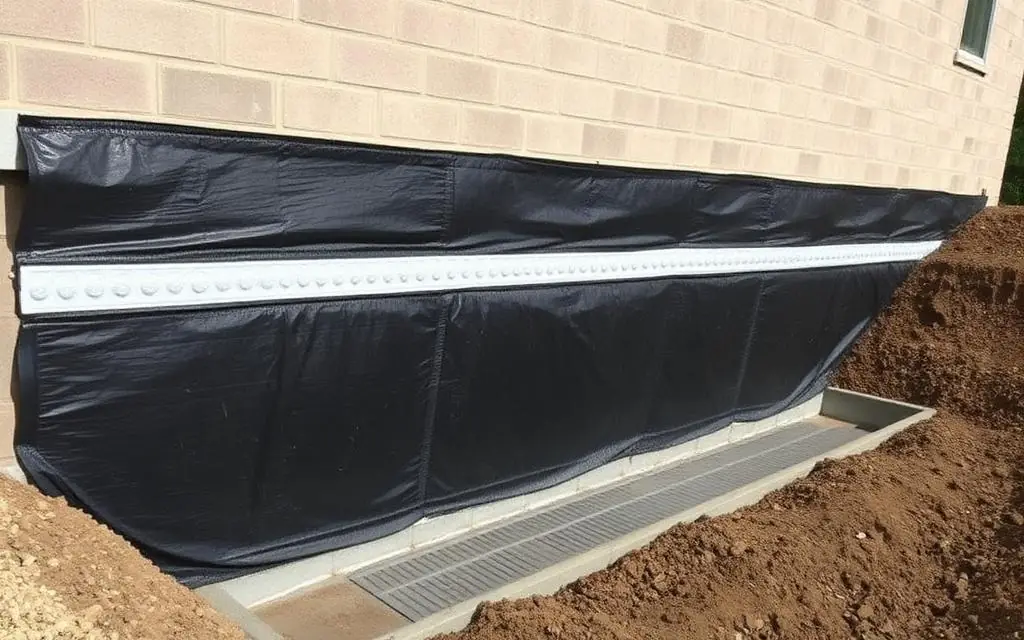
Exterior work stops water earlier. The wall is excavated to the footing, cleaned, repaired, sealed with a membrane, protected with a dimpled board, and new weeping tile is laid in clear stone with a filter cloth. It costs more and disturbs the yard, but it addresses the cause rather than managing the symptom. Many properties end up with a sensible combination of both plus better grading and downspout extensions.
- Exterior walk: grading, downspouts, window wells, surface water
- Interior mapping of where and when water appears
- Crack injection, interior drainage, or full exterior membrane
- Sump and discharge sized to the volume of water
- Restoration of landscaping, floor and finished walls
Compare quotes for water removal from local contractors who inspect first.
Where basement water usually comes from
Surface water is the most common and the most fixable. Ground that slopes toward the house, downspouts dumping at the foundation, and window wells without drainage put hundreds of litres against the wall during a single storm. Correcting grade and extending downspouts solves a surprising number of basement leaks for a fraction of the cost of a system.
Hydrostatic pressure is the harder case. When the water table rises after heavy rain or spring melt, water is pushed up under the slab and through the floor-wall joint. Nothing applied to the inside surface will resist that pressure; it needs drainage and a pump, or exterior work.
Then there are structural entry points: shrinkage cracks in poured walls, deteriorated mortar joints in block, the cold joint where the wall meets the footing, and failed pipe penetrations. And separately, backwater through the floor drain during a sewer surcharge, which is a drainage problem, not a waterproofing one, and is addressed with a backwater valve.
What drives the cost of water removal
Linear metres of wall treated is the base measure. Beyond that, depth of excavation and what sits above the work zone matter enormously: an open side yard is straightforward, while a deck, a walkway, mature landscaping, an air conditioner or a neighbouring property line all add labour and sometimes rule out exterior work entirely.
Interior work is priced by the difficulty of getting to the footing. Breaking concrete along a finished basement means removing flooring, cutting drywall, and reinstating everything afterwards. That restoration can rival the drainage work in cost, so confirm whether it's in the quote or your responsibility.
Pumps, backup power, discharge routing and any electrical work are separate items. So is dealing with what's already wet: extraction, drying equipment, removal of soaked insulation and drywall, and mould remediation where growth has started.
- Length and depth of the affected foundation wall
- Interior drainage versus exterior excavation
- Obstructions: decks, walkways, landscaping, tight lot lines
- Concrete breaking and reinstatement inside
- Sump, backup pump, discharge line and electrical
- Drying, demolition and mould remediation where needed
Timelines and living through the work
Crack injection is a couple of hours. An interior perimeter system in an average basement runs three to five working days, plus concrete curing. Exterior excavation on one wall is typically two to four days weather permitting, longer if the ground is saturated or the dig is deep.
Interior work is dusty and loud; concrete cutting produces silica dust that should be controlled with water or vacuum extraction, and reputable crews seal the work area. Exterior work means heavy equipment on the property and a yard that will not look the same for a season.
Ask for photos at each stage, particularly of the cleaned wall, the membrane, and the new weeping tile in stone before backfill. Once the trench is closed nobody can verify what was installed, and that documentation supports any future warranty claim.

Choosing a waterproofing contractor
This field attracts high-pressure sales, so slow down. Get at least three assessments, insist each one explains the water path they believe is responsible, and be sceptical of anyone who quotes a full system without inspecting outside. A contractor who suggests fixing your grading and downspouts first is being honest, not lazy.
Read the warranty carefully. Transferable, written warranties are common in this trade, but the exclusions matter more than the headline number of years. Confirm whether it covers the treated section only, what voids it, and whether the company has been trading long enough to be around when you need it.
- Written diagnosis explaining where the water enters
- Liability insurance and workers' compensation coverage
- Scope naming materials: membrane type, pipe, stone, filter cloth
- Restoration standard for yard and interior finishes
- Warranty terms, exclusions and transferability in writing
Describe the problem once and hear back from contractors who work on homes like yours.