Proudly Canadian
Shower Repair in Canada: what's involved, what it costs, and how to hire
CentFix
Updated regularly · Canada-wide
If you're looking into shower repair, you probably want three things answered: what the work actually involves, what it's likely to cost, and how soon someone can get to it. This guide covers all three in plain language so you can have a useful conversation with a plumber instead of a guessing match over the phone.
CentFix is a matching service. You describe the job once and we route it to independent professionals who serve your address. Licences, insurance, warranties and reviews belong to the individual businesses that earned them, we connect you, they do the work.
Everything below applies across Canada and reflects how fixture work is normally handled in houses, condos and small commercial properties, including the seasonal and code realities that shape the job here.
What shower repair involves
Shower Repair covers removing or servicing the existing unit, checking what's behind it, and fitting the replacement so it seals, drains and operates correctly. The visible part takes minutes; the work that determines whether the job goes smoothly happens at the connections.
A careful plumber tests the isolation valves first. Old multi-turn stops often won't close fully or start weeping once they're moved, so replacing them with quarter-turn valves during the visit is standard practice and cheap insurance. They'll also check the condition of supply lines, the drain assembly, and, for toilets, the flange and its height relative to the finished floor.
Fit matters more than people expect. Toilets come in different rough-in dimensions. Faucets come in single-hole, four-inch and eight-inch configurations. A new tub or shower base needs the drain in the right position. Confirming these before buying the fixture avoids the most common and most avoidable delay in this category.
- Isolation valve condition checked and usually upgraded
- Rough-in dimensions and drain position confirmed
- Proper seals: wax or waxless ring, plumber's putty, silicone
- Removal and disposal of the old unit
- Leak test under pressure and after drainage
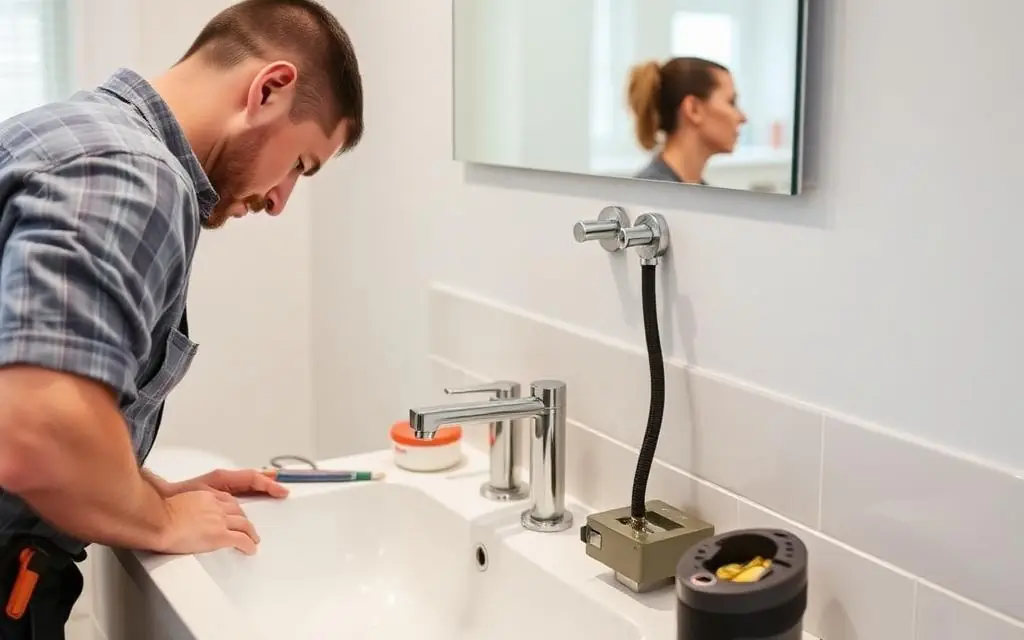
Compare quotes for shower repair from licensed plumbers nearby.
Repair or replace
A dripping faucet is usually a cartridge or a set of seats and springs, an inexpensive repair when parts are still available for the brand. On mid-range and premium fixtures, parts often are; on builder-grade units from a decade ago, frequently not, and replacement becomes the cheaper route once labour is counted.
Toilets that run constantly need a flapper, fill valve or flush valve, all straightforward. Toilets that rock, leak at the base, or need two flushes every time are candidates for replacement, particularly if they're old enough to use significantly more water per flush than a modern unit.
For tubs and showers, the question is usually about the valve behind the wall rather than the trim you can see. Replacing trim is easy. Replacing a valve body means opening the wall, and at that point it's worth considering whether the whole assembly should be updated with an anti-scald valve while access is open.
What affects the price of shower repair
Labour time is the main variable, and it's driven by condition rather than by the fixture. Seized fittings, corroded bolts, a shutoff that fails during the job, or a supply line that snaps all add time. Plumbers who quote a flat rate build some of that risk in; hourly quotes reflect it as it happens.
Who supplies the fixture matters. Install-only work with your own purchase avoids a markup but shifts responsibility for fit, completeness and warranty to you. Supply-and-install usually carries a modest markup and a single point of accountability if something arrives damaged or fails early.
Extras change things: valve replacement behind a wall, moving a drain, tiling or patching after removal, and disposal of an old cast-iron tub, which is genuinely heavy work and often a two-person task.
- Straight swap versus relocating supply or drain
- Condition of existing valves, fittings and flange
- Fixture supplied by you or by the plumber
- Wall or floor opening and any tile work
- Removal and disposal of the old fixture
Timelines and preparation
A faucet or toilet swap is typically one to two hours. A shower valve replacement with wall access runs half a day, plus tile repair afterwards. A tub replacement is a full day or more, and often involves a second trade for surround and tile.
Prepare by clearing the space: empty the vanity, remove items from the tub surround, and make sure the plumber can reach the shutoffs. If you've bought the fixture, unbox it and check that every part is present before the appointment, a missing mounting kit turns a one-visit job into two.
Expect silicone at the base of a new toilet or around a tub edge to need curing time before use, usually a few hours. Ask before running water on a freshly sealed fixture.
Choosing a plumber for fixture work
For small jobs, ask about the minimum charge. Most companies have one, and it can be cheaper to have two or three small items done in a single visit than to book them separately across three weeks.
Confirm the licence and insurance as always, and ask whether the workmanship warranty covers the connections they made. A plumber standing behind their own joints is standard; a plumber warranting a fixture you supplied is not, and knowing which is which prevents an awkward conversation later.
- Minimum charge and whether multiple small jobs can be combined
- Whether shutoff valve upgrades are included or extra
- Who supplies the fixture and who carries the warranty
- Disposal of the old unit
- Written invoice listing parts and work performed
List everything you need done and compare quotes from local plumbers.