Proudly Canadian
High Rise Plumbing Services in Canada: what's involved, what it costs, and how to hire
CentFix
Updated regularly · Canada-wide
If you're looking into high rise plumbing services, you probably want three things answered: what the work actually involves, what it's likely to cost, and how soon someone can get to it. This guide covers all three in plain language so you can have a useful conversation with a plumber instead of a guessing match over the phone.
CentFix is a matching service. You describe the job once and we route it to independent professionals who serve your address. Licences, insurance, warranties and reviews belong to the individual businesses that earned them, we connect you, they do the work.
Everything below applies across Canada and reflects how commercial plumbing is normally handled in houses, condos and small commercial properties, including the seasonal and code realities that shape the job here.
What high rise plumbing services covers
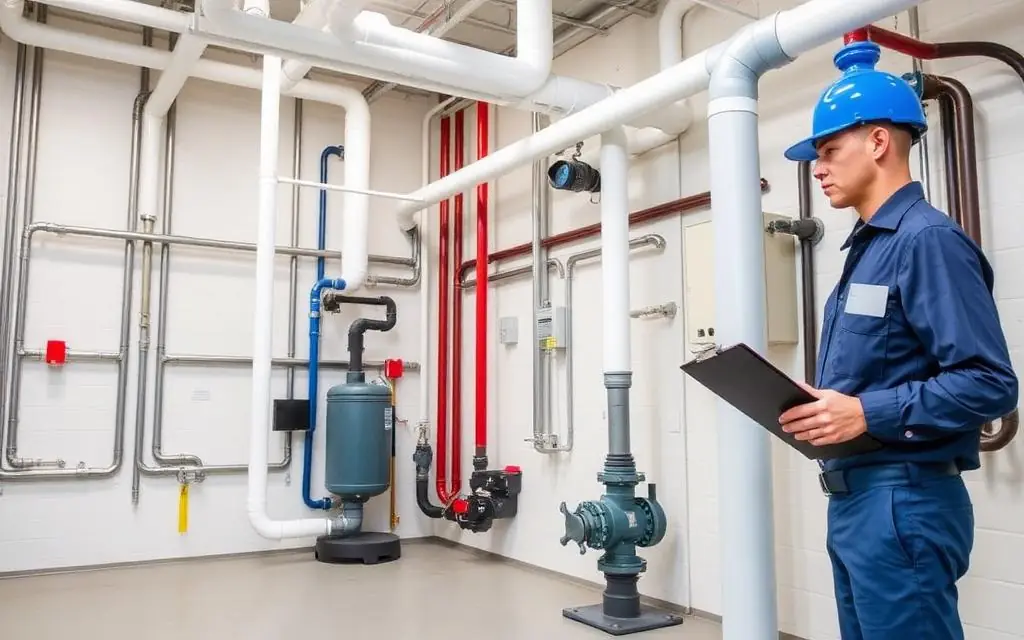
High Rise Plumbing Services deals with systems built for volume and continuous use: larger diameter mains and stacks, booster pumps, commercial water heaters or boilers, backflow prevention assemblies, grease interceptors, floor drains and trap primers, and fixtures rated for heavy traffic. The engineering principles are the same as residential, but the tolerances and consequences are not.
Multi-storey buildings add pressure management. Water has to reach the top floor at usable pressure without over-pressurising the lower floors, which means booster systems, pressure-reducing valves at zones, and careful attention to stack venting. A change on one floor can affect fixtures several floors away, so diagnosis has to consider the whole riser.
Compliance is a bigger part of the work. Backflow prevention devices require testing and documentation on a set schedule in most municipalities. Grease interceptors have cleaning and record-keeping requirements. Commercial water temperatures are regulated in some settings. Contractors in this space should be handling the paperwork as a normal part of service.
- Larger-diameter supply, drainage and venting systems
- Booster pumps, zone pressure control and riser diagnostics
- Backflow assembly testing, certification and reporting
- Grease interceptors and kitchen drainage
- Commercial water heating and recirculation
- Scheduled preventive maintenance and documentation
Describe the property and compare quotes for high rise plumbing services from contractors who work on buildings like yours.
Planning work around occupants
In an occupied building, the schedule is part of the scope. Water shutdowns need notice, usually written and posted in advance, and the notice period is often set by the lease or by provincial residential tenancy rules. Getting this wrong creates complaints that outlast the repair.
Many contractors offer after-hours and overnight work for exactly this reason. It costs more per hour and frequently saves money overall, because a restaurant that doesn't close or an office that doesn't lose a day of productivity is worth the premium.
Ask how the contractor sequences shutdowns: which risers are isolated, for how long, and what temporary provisions exist. A well-planned job isolates the smallest section necessary rather than draining the building.
What affects the cost of high rise plumbing services
Scale is obvious; access and timing are the variables that actually move the number. Work in occupied units, in ceilings above finished commercial space, in mechanical rooms with limited clearance, or on a riser that serves twenty units all take longer than the equivalent residential task.
Materials for commercial systems cost more: larger fittings, cast iron or specified pipe, certified backflow assemblies and commercial-grade fixtures. Some jobs require engineered drawings or a mechanical engineer's involvement, and permits in commercial settings tend to be more involved than residential ones.
For ongoing arrangements, get pricing structured clearly: scheduled maintenance visits, an agreed hourly rate for call-outs, response time commitments, and how emergencies outside business hours are priced. Predictability is usually worth more than the lowest hourly figure.
- Number of units, fixtures or floors affected
- Occupied-building access and required notice periods
- After-hours or overnight scheduling
- Commercial-grade materials and certified assemblies
- Engineering, permits and inspection in commercial settings
- Maintenance contract terms and response commitments
Documentation, records and liability
Commercial clients need paper. Backflow test certificates, interceptor service records, permit and inspection sign-offs, and a maintenance log all matter for compliance and for insurance. Ask what documentation comes with the work and in what format.
Insurance limits should match the exposure. A contractor working on a twenty-unit building's main stack needs meaningfully higher liability coverage than one replacing a residential faucet. Ask for a certificate of insurance naming the required limits and confirm workers' compensation coverage is current.
For property managers, a single point of contact and consistent reporting are worth as much as the technical work. Agree in advance who receives service reports, how urgent issues are escalated, and what the after-hours process looks like.

Choosing a commercial contractor
Ask specifically about experience with your building type. Restaurants, medical offices, high-rise residential and industrial facilities each have their own requirements, and a strong residential company is not automatically the right fit.
Check capacity as well as competence: crew size, ability to respond to an emergency while other jobs are running, and whether they hold common parts in stock. Ask for references from properties comparable to yours, and actually call them.
- Licence, liability limits and workers' compensation coverage
- Experience with your specific building type
- Certified backflow testers on staff where relevant
- After-hours capacity and stated response times
- Reporting format and documentation provided
Describe the property and scope once, and hear back from contractors serving your area.