Proudly Canadian
Door Lock Repair in Canada: what's involved, what it costs, and how to hire
CentFix
Updated regularly · Canada-wide
Door Lock Repair is one of the jobs homeowners call a locksmith for most often, and the price you're quoted usually says more about the condition of what's already there than about the work itself.
CentFix is a matching service. You describe the job once and we connect you with independent locksmiths who serve your address. Licensing, insurance, warranties and reviews belong to the individual businesses that earned them.
Everything below is written for door lock repair specifically: scope, what pushes a price up or down, realistic timelines, the rules that apply in Canada, and the questions worth asking before anyone starts.
What door lock repair involves
Door Lock Repair sits within locksmith work, so the same fundamentals apply: proper assessment first, then the work itself, then a check that the result holds up. A locksmith who quotes without looking is quoting the job they hope it is.
Emergency work is mostly lockouts and broken keys. A competent locksmith opens most residential locks without damage using picking or bypass techniques, and drilling should be a last resort rather than an opening move.
Planned residential work is rekeying, hardware replacement and upgrades: deadbolts, smart locks, patio door security and reinforcing strike plates. Rekeying changes which key operates an existing lock and is far cheaper than replacing hardware that is otherwise sound.
- Emergency lockouts for homes, businesses and vehicles
- Rekeying locks, including keying multiple doors alike
- Deadbolt, handle set and smart lock installation
- Lock repair, including sticking cylinders and misaligned strikes
- Commercial master key systems and access hardware
- Automotive keys, fobs and transponder programming
What to expect when the locksmith arrives
The first visit for door lock repair is mostly about scope. Expect questions about how long the issue has been there, what's been done before, and how the space is used, because all three change the recommendation.
- A walkthrough or a few questions before anything is quoted, so the price reflects your property rather than an average
- A clear description of what's included in door lock repair and what would be treated as extra
- Protection of the surrounding area, and cleanup when the work is finished
- Written pricing, with a note of anything that could change once work is underway
- A plain answer on the warranty: how long it runs and what it actually covers
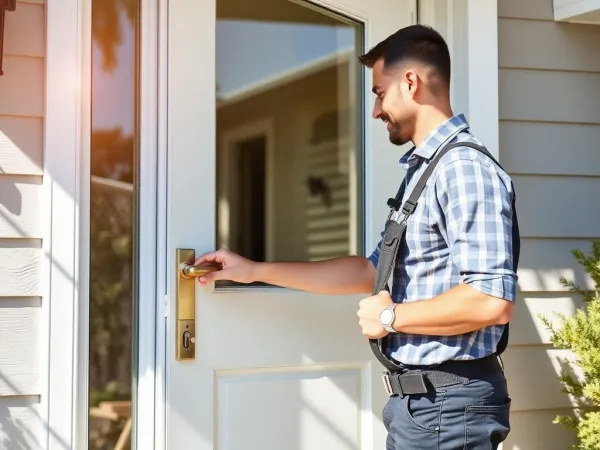
Describe the job once and independent locksmiths nearby come back with quotes you can compare.
What affects the price of door lock repair
Call-out and time of day drive emergency pricing. The same lockout costs meaningfully more at two in the morning than at two in the afternoon, which is normal, but it should be quoted before anyone is dispatched.
For planned work, the count of cylinders and the hardware chosen set the number. Rekeying is priced per cylinder with a service call, so doing all doors at once is efficient.
Hardware quality varies enormously. Builder-grade deadbolts and commercial-grade hardware differ in both price and how long they resist force, and for exterior doors that difference is the whole point.
- Time of day and whether the call is an emergency
- Number of cylinders being rekeyed or replaced
- Hardware grade and whether high-security cylinders are chosen
- Whether a lock can be opened non-destructively or must be drilled
- Door and frame condition, since misalignment often needs correcting
- Programming for automotive transponder keys and fobs
How long the work takes and how soon someone can come
Emergency response is typically within thirty to ninety minutes in urban areas, and most residential lockouts are resolved in minutes once someone arrives.
Rekeying a house takes under an hour for a handful of doors. Hardware installation runs a few hours, more if doors need adjustment. Commercial master key systems take planning and are scheduled rather than dispatched.
How to choose the right locksmith for this job
Verify the business is local and real. Ask for the legal business name and address when you call, and be cautious of dispatchers who cannot answer that. A locksmith should also ask you to prove you are entitled to access before opening anything.
Insist on the total price before dispatch. A quote that turns into a much larger number on arrival is the single most common complaint in this trade, and confirming in advance avoids it.
- A verifiable local business name and address
- Total price confirmed before dispatch, including call-out
- Proof of identity requested from you before entry
- Insurance covering damage to doors and hardware
- Whether non-destructive entry will be attempted first
Questions to ask before you book door lock repair
You don't need to know the trade to ask good questions. These are the ones that tell you whether a company has actually thought about your job.
- Have you done door lock repair on a property like mine recently?
- What is the total price, including the call-out fee?
- Will you attempt to open the lock without damaging it?
- Can I rekey these locks instead of replacing them?
- Can all my exterior doors be keyed alike?
- What grade of hardware is this, and what does that mean in practice?
- Do you provide an invoice with your business details on it?
Compare quotes for door lock repair from locksmiths working in your area. It costs you nothing.
Permits, rules and who is allowed to do the work
Licensing for locksmiths varies by province and in some places by municipality, with certain jurisdictions requiring registration or security-industry licensing. Ask locally rather than assuming.
A locksmith should require proof that you are entitled to enter before opening a door. If nobody asks, that is a warning rather than a convenience.
Commercial exit doors are governed by fire and building codes. Hardware that prevents free exit is not permitted on required exits, whatever the security concern, and a knowledgeable locksmith will steer you to compliant options.
Seasonal timing and Canadian conditions
Extreme cold causes its own class of calls: frozen cylinders, stiff mechanisms and keys snapping in locks that have been forced. Lubricating locks before winter prevents most of it.
Moving season through the summer brings the rekeying rush, when new owners and landlords change over locks. Booking ahead of a closing date is easier than trying to get someone on the day.
Common mistakes that cost homeowners money
The costly mistakes are accepting an unconfirmed price in an emergency, and installing a strong deadbolt into a weak frame. A lock is only as good as what it bolts into.
- Calling without confirming the total price first
- Allowing a lock to be drilled before non-destructive entry is attempted
- Fitting quality hardware to a frame with a short strike screw
- Not rekeying after buying a home or changing tenants
- Forcing a frozen or stiff lock instead of lubricating it
Keeping the work in good shape afterwards
Locks are mechanical and respond to a small amount of care. The two things that kill them are grit and moisture, particularly on exterior doors that take weather directly.
- Lubricate cylinders annually with a dry graphite or PTFE lubricant, not oil
- Fit long screws through the strike plate into the framing
- Rekey when you move in or when keys go missing
- Adjust doors that need lifting or forcing before the lock takes the strain
- Keep a spare key somewhere other than under the mat
Where CentFix fits in
CentFix does not do locksmith work. We take one clear description of your door lock repair job and put it in front of independent locksmiths who already work in your area, so you get several real quotes instead of spending an afternoon leaving voicemails.
Homeowners never pay us. The professionals you hear from run their own businesses, carry their own licensing and insurance, and stand behind their own work.