Proudly Canadian

Gas fireplace repair in Canada: common faults, diagnostics and what affects cost
CentFix
Updated regularly · Canada-wide
A gas fireplace sits idle for months during the warmer half of the year, then gets switched on the first frosty evening in October. That long pause is when dust settles on pilot orifices, spider webs block venturi tubes, and weak thermopiles finally stop generating enough voltage to hold the main gas valve open.
Because a gas fireplace burns fuel inside your living space, guesswork does not belong near it. Knowing what usually fails, how a licensed technician tests the unit, and when a repair stops making sense helps you ask the right questions before approving the work.
Common signs your gas fireplace needs repair
Some faults shut the fireplace down completely, while others show up gradually as poor flame quality or strange noises. Either way, running a unit that is not burning cleanly can coat the glass in soot or create a venting hazard.
- The pilot light will not stay lit after you release the control knob, or refuses to spark at all
- The pilot burns steadily, but the main burner will not turn on from the wall switch, thermostat or remote
- Delayed ignition: you hear gas flowing for several seconds before the burner lights with a loud puff or thump
- Flames shut off on their own after running for a few minutes
- Lazy, smoky orange flames that leave black soot on the logs or inside the glass
- A rattling, humming or dead circulation blower fan
- A persistent gas odour, or a strong chemical or exhaust smell while the unit runs
How a technician diagnoses a gas fireplace
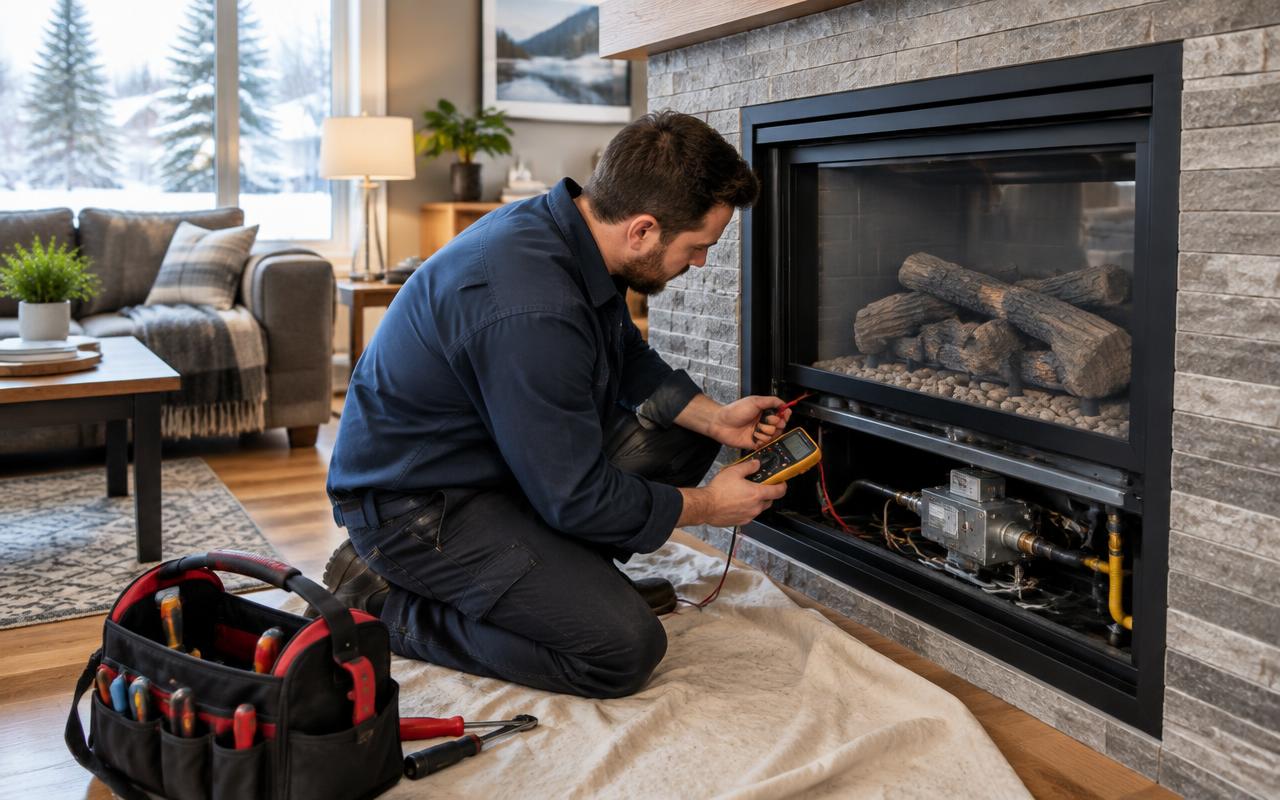
A proper repair starts with testing, not swapping parts until something works. Depending on whether your fireplace uses a standing-pilot millivolt system or an intermittent pilot ignition (IPI) electronic module, the technician follows the ignition sequence step by step.
On a millivolt unit, they measure open-circuit and under-load output from the thermocouple and thermopile with a multimeter, then test resistance across the wall switch and wiring. A switch with oxidized contacts often mimics a dead gas valve and costs far less to fix.
On an electronic IPI fireplace, they check the transformer, backup battery pack, receiver, ignition module and flame rectification sensor. Once the burner is running, they verify manifold gas pressure, inspect the flame pattern, test accessible joints for leaks, and check that the glass door seals tight.
Share the brand, fuel type and symptoms once to compare quotes from independent HVAC pros serving your area.
Repair versus replacement: when to fix and when to move on
Many fireplace breakdowns come down to wear items: a thermocouple, thermopile, pilot assembly, wall switch, remote receiver or blower motor. On a unit whose firebox, burner pan and venting are in solid shape, replacing those components normally makes sense.
Replacement enters the conversation when the firebox or heat exchanger is rusted through, the gas valve or control board is discontinued by the manufacturer, or the glass assembly is cracked and no longer available for that model. Ask the technician to confirm parts availability and give you the full installed cost before you approve a major repair on an older fireplace.
Safety steps before the technician arrives
If you smell raw natural gas or propane around the fireplace, turn the gas shut-off valve off if it is safe to reach, avoid operating light switches or flames, leave the house, and call your gas utility or emergency services from outside.
If the fireplace has delayed ignition, cracked glass, or a heavy soot buildup, leave it turned off until a licensed gas technician inspects it. In Canada, gas appliance repairs must be performed by a provincially certified gas fitter (for example, TSSA-registered in Ontario or licensed through Technical Safety BC, depending on your province). Never run a direct-vent fireplace with the glass panel removed or unlatched.
What affects the cost of gas fireplace repair
Two fireplace repairs rarely price out the same because access, ignition style and parts availability vary widely between brands and models.
- Diagnostic fee and whether it is credited toward the repair if you proceed
- The failed component: a wall switch or thermopile is straightforward compared to a gas valve or electronic control module
- Whether the part is stocked on the truck or has to be ordered from the manufacturer, which requires a return visit
- Access to the lower control compartment, especially on tight masonry inserts or built-in surrounds
- Fuel type (natural gas versus propane) and whether venting or termination cap work is also needed
- Seasonality: repair demand peaks during the first cold snaps of autumn and winter
Describe the issue and compare written repair quotes from independent contractors near you.