Proudly Canadian
Gas Pipe Repair in Canada: what's involved, what it costs, and how to hire
CentFix
Updated regularly · Canada-wide
Gas Pipe Repair is one of the jobs homeowners call a HVAC technician for most often, and the price you're quoted usually says more about the condition of what's already there than about the work itself.
CentFix is a matching service. You describe the job once and we connect you with independent HVAC contractors who serve your address. Licensing, insurance, warranties and reviews belong to the individual businesses that earned them.
Everything below is written for gas pipe repair specifically: scope, what pushes a price up or down, realistic timelines, the rules that apply in Canada, and the questions worth asking before anyone starts.
What gas pipe repair involves
Gas Pipe Repair sits within heating and cooling work, so the same fundamentals apply: proper assessment first, then the work itself, then a check that the result holds up. A HVAC technician who quotes without looking is quoting the job they hope it is.
HVAC covers three connected things: the equipment that makes heat or removes it, the distribution that moves conditioned air around the house, and the controls that decide when any of it runs. Most homeowners think about the first, but distribution is what usually decides whether a house feels comfortable.
A service call normally starts with the symptom and the sequence. A technician checks whether the system is calling for heat, whether ignition happens, whether airflow is present, and what the pressures and temperatures look like once it runs. Those readings separate a failing igniter from a blocked flue or a plugged filter that has starved the system for months.
- Furnaces: repair, replacement, ignition and control faults, venting and combustion issues
- Air conditioners: repair, refrigerant diagnosis, coil and condenser work, full replacement
- Heat pumps: cold-climate installs, hybrid setups with a gas furnace, defrost and control problems
- Ductwork: sizing, new runs, sealing, balancing and return air corrections
- Controls: thermostats, zoning, humidifiers, HRV and ERV integration
- Maintenance: seasonal tune-ups, filter and coil cleaning, safety and combustion checks
What to expect when the HVAC technician arrives
The first visit for gas pipe repair is mostly about scope. Expect questions about how long the issue has been there, what's been done before, and how the space is used, because all three change the recommendation.
- A walkthrough or a few questions before anything is quoted, so the price reflects your property rather than an average
- A clear description of what's included in gas pipe repair and what would be treated as extra
- Protection of the surrounding area, and cleanup when the work is finished
- Written pricing, with a note of anything that could change once work is underway
- A plain answer on the warranty: how long it runs and what it actually covers
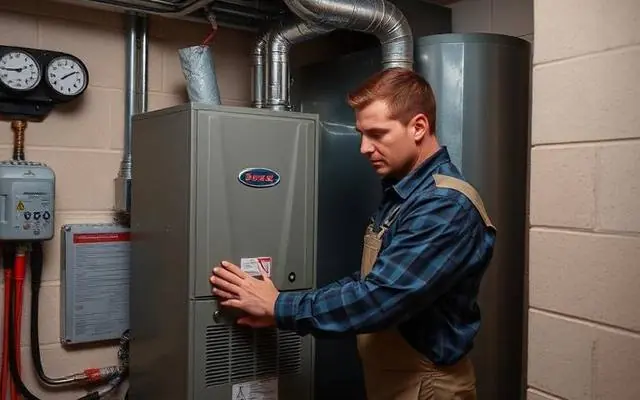
Describe the job once and independent HVAC contractors nearby come back with quotes you can compare.
What affects the price of gas pipe repair
Equipment choice sets the floor, but installation sets the real number. A straight furnace replacement in a clean mechanical room with existing venting in the right place is a very different job from one that needs new venting, a condensate drain, gas line changes or a return air rebuild.
Ductwork is the hidden variable. Many houses have distribution that was marginal when built and became worse after a basement was finished around it. Adding proper returns or resizing trunk lines improves comfort more than a higher efficiency rating will, but it adds labour and it is the line item most often left out of the cheapest quote.
Efficiency tier, staging and variable speed equipment all move price, and so does the season. Emergency replacements in a cold snap cost more than the same job booked in the shoulder season, because availability is scarce and everyone needs it at once.
- Equipment type, capacity and efficiency tier
- Venting, gas line and condensate work required by the new unit
- Ductwork condition, return air capacity and any rebalancing needed
- Access to the mechanical room and how the old unit comes out
- Permit and gas inspection requirements
- Whether the work is an emergency in peak season or planned in a shoulder month
How long the work takes and how soon someone can come
Repairs are usually same visit if the part is on the truck. Igniters, flame sensors, capacitors, contactors and common control boards are stocked by most companies. Less common parts, especially for older or discontinued equipment, mean an order and a second visit, which is worth asking about before you approve a repair on a system near the end of its life.
Replacements are typically one day for a furnace or air conditioner in a straightforward layout, longer when ductwork, venting or electrical changes are involved. Heat pump installs and hybrid systems often need a second day. Booking in spring or early autumn gets you better scheduling and more attention than booking during the first cold week.
How to choose the right HVAC technician for this job
The proposal tells you more than the sales pitch. A contractor who measured the house, looked at the ducts and explained why they are recommending a given capacity has done the work. One who quoted from the model number on your old furnace has not.
Gas work is licensed work. Confirm the company holds the gas fitting and refrigeration credentials required in your province, and that the technician attending is certified, not just the owner.
- Provincial gas fitting and refrigeration certification
- A written proposal showing capacity, model numbers and what is included
- Whether a heat loss calculation or at least a room-by-room review was done
- What the labour warranty covers and for how long, separate from the equipment warranty
- Who handles permits, inspections and any rebate paperwork
Questions to ask before you book gas pipe repair
You don't need to know the trade to ask good questions. These are the ones that tell you whether a company has actually thought about your job.
- Have you done gas pipe repair on a property like mine recently?
- How did you arrive at that capacity for my house?
- Is my existing ductwork adequate for this equipment, and if not, what would fix it?
- What is the venting plan, and does it involve new penetrations?
- How old is my current unit, and does repairing it make sense at this age?
- What does the labour warranty cover in years one, two and beyond?
- Are there rebates available on this equipment, and do you handle the paperwork?
Compare quotes for gas pipe repair from HVAC contractors working in your area. It costs you nothing.
Permits, rules and who is allowed to do the work
Gas appliances are regulated provincially and installation must be done by a licensed gas fitter. Permits and inspections apply to most furnace and boiler installs, and to venting changes. This is one area where a permit is genuinely protective, an improperly vented appliance is a carbon monoxide risk rather than a paperwork issue.
Refrigerant handling is also regulated. Technicians working on air conditioners and heat pumps require certification to recover and charge refrigerant, and venting it deliberately is an offence. If someone offers to top up a system without finding the leak, that is a signal about how the rest of the work will go.
Rebate programs come and go by province and utility. Contractors who install a lot of high-efficiency equipment usually know the current programs and their documentation requirements, which often include specific model eligibility and a licensed installer.
Seasonal timing and Canadian conditions
Demand in this trade is brutally seasonal. The first hard freeze and the first heat wave both generate more calls in a week than the preceding month, and that is exactly when availability disappears and premium pricing appears.
The practical move is to test the system out of season. Run the air conditioner on a mild day in spring and the furnace on a cool evening in early autumn. Finding a fault then means a booked appointment at normal rates instead of an emergency call at the worst possible time.
Common mistakes that cost homeowners money
The most common expensive error is buying capacity instead of buying comfort. Bigger equipment does not fix an uneven house, and it frequently makes humidity control worse in summer because the system satisfies the thermostat before it has run long enough to dehumidify.
- Replacing equipment without addressing known duct or return air problems
- Approving a large repair on a system already near the end of its service life
- Topping up refrigerant repeatedly instead of finding and fixing the leak
- Neglecting filter changes until airflow damage has already happened
- Waiting for total failure in January instead of replacing in the shoulder season
Keeping the work in good shape afterwards
Equipment that gets a seasonal check tends to fail during business hours rather than at midnight. Most of the value is in cleaning, airflow and combustion checks rather than in parts.
- Change or clean filters on the schedule the equipment calls for, more often with pets or renovation dust
- Keep the outdoor condenser clear of leaves, grass clippings and snow drifts
- Have combustion and venting checked annually on any gas appliance
- Watch condensate drains on high-efficiency furnaces, a blocked drain shuts the unit down
- Keep supply and return registers unblocked by furniture and rugs
Where CentFix fits in
CentFix does not do hvac work. We take one clear description of your gas pipe repair job and put it in front of independent HVAC contractors who already work in your area, so you get several real quotes instead of spending an afternoon leaving voicemails.
Homeowners never pay us. The professionals you hear from run their own businesses, carry their own licensing and insurance, and stand behind their own work.