Proudly Canadian
Foundation Underpinning in Canada: what's involved, what it costs, and how to hire
CentFix
Updated regularly · Canada-wide
Before booking foundation underpinning, it helps to know what the visit actually involves, what can change the price on the day, and which questions separate a company that has thought it through from one guessing on the phone.
CentFix is a matching service. You describe the job once and we connect you with independent foundation specialists who serve your address. Licensing, insurance, warranties and reviews belong to the individual businesses that earned them.
Everything below is written for foundation underpinning specifically: scope, what pushes a price up or down, realistic timelines, the rules that apply in Canada, and the questions worth asking before anyone starts.
What foundation underpinning involves
Foundation Underpinning sits within foundation repair, so the same fundamentals apply: proper assessment first, then the work itself, then a check that the result holds up. A foundation contractor who quotes without looking is quoting the job they hope it is.
Foundations fail in a few recognisable ways. Poured walls develop shrinkage cracks early in life, usually vertical and usually not structural. Block walls under lateral soil pressure crack horizontally or in a stair-step pattern and can bow inward. Settlement shows as differential movement, one part of the house dropping relative to another, and it typically comes from soil conditions rather than from the concrete.
Repairs match the failure. Crack injection with epoxy or polyurethane handles non-structural cracks and stops water. Carbon fibre straps or steel bracing resist further inward movement of a bowing wall. Underpinning and helical or push piers transfer load to competent soil below, and that is the answer for genuine settlement.
- Crack injection and sealing on poured concrete
- Carbon fibre and steel bracing for bowing block walls
- Underpinning, helical piers and push piers for settlement
- Footing repair and partial wall rebuilds
- Basement lowering and bench footing where headroom is being added
- Soil, drainage and tree-root related corrections
What to expect when the foundation contractor arrives
The first visit for foundation underpinning is mostly about scope. Expect questions about how long the issue has been there, what's been done before, and how the space is used, because all three change the recommendation.
- A walkthrough or a few questions before anything is quoted, so the price reflects your property rather than an average
- A clear description of what's included in foundation underpinning and what would be treated as extra
- Protection of the surrounding area, and cleanup when the work is finished
- Written pricing, with a note of anything that could change once work is underway
- A plain answer on the warranty: how long it runs and what it actually covers
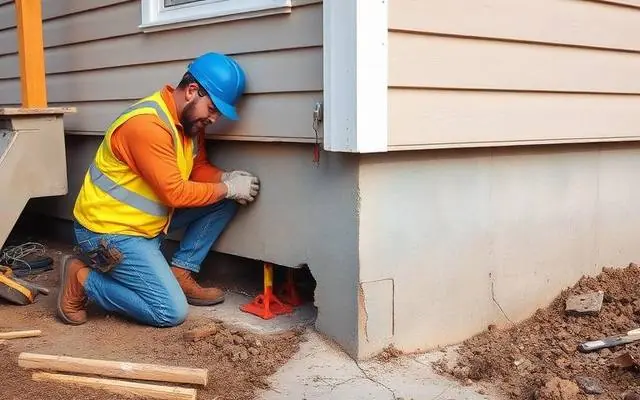
Describe the job once and independent foundation specialists nearby come back with quotes you can compare.
What affects the price of foundation underpinning
The repair method dominates. Injection is a day's work with modest materials. Piering involves engineering, equipment and excavation at each pier location. Underpinning a full wall is a staged structural operation and is priced accordingly.
Access again decides feasibility. Interior work in a finished basement means demolition first. Exterior piering needs room for equipment. Urban lots with zero-lot-line neighbours push jobs toward interior methods that cost more but fit the site.
Engineering is a real line item on structural work, and it should be. A stamped design and a post-work sign-off protect you at resale and are frequently required for the permit.
- Whether the issue is structural or a water and sealing problem
- Repair method: injection, bracing, piering or underpinning
- Number of piers or linear feet of wall involved
- Engineering, permit and inspection costs
- Excavation access and depth to competent soil
- Interior demolition and restoration in a finished basement
How long the work takes and how soon someone can come
Crack injection is same day. Carbon fibre reinforcement is usually one to two days for a wall. Piering runs several days to a couple of weeks depending on pier count and access.
The longer part is often before the work starts. Engineering assessment, drawings, permit review and scheduling an inspection add weeks to a structural repair, and any contractor who promises to start a major structural job tomorrow is skipping something.
How to choose the right foundation contractor for this job
The first thing to judge is the diagnosis. A contractor who measures the bow, records crack width, checks for level across the floor and asks about history is investigating. One who quotes piers from a photo is selling.
For anything structural, an independent engineer's opinion is money well spent. They have no interest in which repair method gets sold, which is exactly why their assessment carries weight with a buyer's inspector later.
- Written assessment describing the failure mode, not just the proposed fix
- Engineering involvement on structural work, with a stamped design where required
- Permit responsibility clearly assigned
- Insurance and workers' compensation coverage
- Warranty terms, duration and transferability
Questions to ask before you book foundation underpinning
You don't need to know the trade to ask good questions. These are the ones that tell you whether a company has actually thought about your job.
- Have you done foundation underpinning on a property like mine recently?
- Is this crack structural, and what tells you that?
- Has the movement stopped, or is it ongoing?
- What caused it, and what stops it from happening again?
- Does this repair need an engineer and a permit?
- What is the least invasive option that actually solves the problem?
- How will this repair look to a home inspector when I sell?
Compare quotes for foundation underpinning from foundation specialists working in your area. It costs you nothing.
Permits, rules and who is allowed to do the work
Structural repairs generally require a building permit and, in most cases, an engineered design. That process exists to protect you, and the paperwork becomes valuable evidence at resale that the work was done properly.
Excavation requires utility locates, and work near a property line may involve notice to neighbours or agreements about access. Contractors who work in your municipality regularly will know what applies.
Anyone can advertise foundation repair, since the trade is not licensed the way electrical is. Engineering involvement is therefore the main quality signal available to a homeowner on a large job.
Seasonal timing and Canadian conditions
Movement tends to reveal itself in the extremes. Clay soils shrink in a dry summer and swell with spring saturation, and frost cycles push at shallow footings. Many homeowners first notice a sticking door in one particular season.
Exterior work is generally scheduled from spring through autumn because excavating frozen ground is slow and costly. Interior methods can proceed year round, which is one reason winter quotes sometimes favour them.
Common mistakes that cost homeowners money
The costly errors here go in both directions. Some homeowners panic at a hairline shrinkage crack and buy a repair they never needed. Others ignore a wall that has moved measurably over two seasons until the fix becomes a rebuild.
- Accepting a major structural quote without an independent engineering opinion
- Cosmetically patching a moving crack and calling it resolved
- Ignoring the water or soil cause after stabilising the wall
- Finishing a basement over an unresolved structural issue
- Choosing a contractor with no local history on a job you cannot inspect afterwards
Keeping the work in good shape afterwards
Once repaired, foundations mostly need monitoring and water control. Keeping moisture consistent around the perimeter is the practical goal, since it is swings in soil moisture that drive most movement.
- Keep grading sloping away from the house and downspouts discharging well clear
- Mark and date any crack you are watching so change is measurable
- Avoid planting large trees close to the foundation in clay soils
- Keep gutters clear so one corner does not get saturated repeatedly
- Keep documentation and engineering reports for resale
Where CentFix fits in
CentFix does not do foundation repair work. We take one clear description of your foundation underpinning job and put it in front of independent foundation specialists who already work in your area, so you get several real quotes instead of spending an afternoon leaving voicemails.
Homeowners never pay us. The professionals you hear from run their own businesses, carry their own licensing and insurance, and stand behind their own work.