Proudly Canadian
Electrical Rewiring in Canada: what's involved, what it costs, and how to hire
CentFix
Updated regularly · Canada-wide
Electrical Rewiring looks straightforward from the outside. What decides how long it takes, and what it costs, is what a electrician finds once the work starts.
CentFix is a matching service. You describe the job once and we connect you with independent electricians who serve your address. Licensing, insurance, warranties and reviews belong to the individual businesses that earned them.
Everything below is written for electrical rewiring specifically: scope, what pushes a price up or down, realistic timelines, the rules that apply in Canada, and the questions worth asking before anyone starts.
What electrical rewiring involves
Electrical Rewiring sits within electrical work, so the same fundamentals apply: proper assessment first, then the work itself, then a check that the result holds up. A electrician who quotes without looking is quoting the job they hope it is.
Residential electrical splits into service, distribution and devices. Service is what the utility brings to the house: the mast, meter base, main disconnect and the panel itself. Distribution is the branch circuits running from that panel to every room. Devices are what you actually touch, outlets, switches, fixtures, smoke alarms, appliance connections and hardwired equipment like a range or a hot tub.
Most service calls start as a fault-finding exercise. A good electrician traces the circuit rather than replacing the first thing that looks suspect, because a warm outlet halfway along a run is usually a symptom of a loose connection somewhere else. Expect the visit to begin with testing and questions about when the problem shows up, what is plugged in and whether anything changed recently in the house.
- Troubleshooting: tripping breakers, dead outlets, flickering lights, buzzing panels, burning smells
- Panel work: replacing failed breakers, panel upgrades, subpanels, service increases
- Circuits and wiring: new circuits, AFCI and GFCI protection, replacing aluminium or knob-and-tube
- Devices and fixtures: outlets, switches, dimmers, pot lights, ceiling fans, hardwired smoke and CO alarms
- Outdoor and specialty: EV chargers, hot tub connections, generators and transfer switches, exterior lighting
- Renovation wiring: kitchens, basements, garages, additions and secondary suites
What to expect when the electrician arrives
The first visit for electrical rewiring is mostly about scope. Expect questions about how long the issue has been there, what's been done before, and how the space is used, because all three change the recommendation.
- A walkthrough or a few questions before anything is quoted, so the price reflects your property rather than an average
- A clear description of what's included in electrical rewiring and what would be treated as extra
- Protection of the surrounding area, and cleanup when the work is finished
- Written pricing, with a note of anything that could change once work is underway
- A plain answer on the warranty: how long it runs and what it actually covers
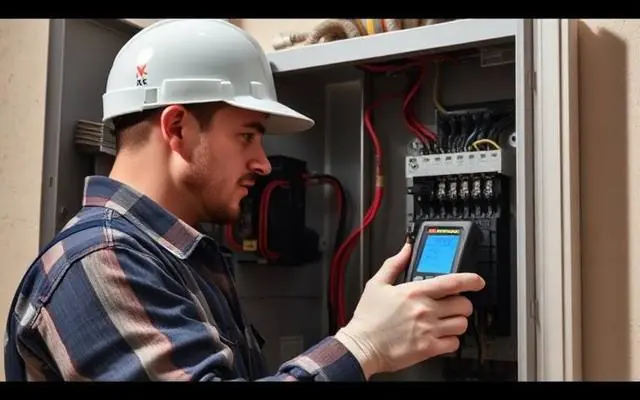
Describe the job once and independent electricians nearby come back with quotes you can compare.
What affects the price of electrical rewiring
Access decides most of the price. Running a new circuit through an unfinished basement with open joists is quick. The same circuit through a finished two-storey with plaster walls means fishing wire, cutting access holes and patching afterwards, and the patching is often a separate trade.
The state of the existing system matters just as much. A modern panel with spare slots takes a new breaker in minutes. A full panel, an obsolete brand nobody makes breakers for, aluminium branch wiring or cloth-covered conductors all turn a small addition into a larger conversation about bringing part of the system up to current code.
Then there is scale and paperwork. Anything touching the service entrance involves the utility and an inspection, and that scheduling is outside the electrician's control. Two-person jobs, high ceilings needing lifts, and rural travel outside a normal service radius all show up on the labour line.
- Whether walls and ceilings are open or finished
- Panel capacity, age and brand, and whether breakers are still available
- Existing wiring type, aluminium and knob-and-tube add scope
- Distance from the panel to the new device and the route the cable has to take
- Permit, inspection and utility coordination where the service is involved
- After-hours or emergency attendance, and travel to rural addresses
How long the work takes and how soon someone can come
Small device work is usually a single short visit. Replacing outlets and switches, adding GFCI protection, swapping a light fixture or chasing a dead circuit typically fits inside a couple of hours once someone is on site, assuming the fault turns out to be where the testing points.
Bigger work runs on a schedule shaped by permits and the utility, not just the crew. A panel upgrade is often a single day of physical work but sits inside a longer window because the disconnect, the swap and the inspection have to line up. Rewiring, suite wiring and renovation rough-ins are staged around the other trades and usually need two visits, one before the walls close and one to finish devices afterwards.
How to choose the right electrician for this job
Licensing is not optional in this trade. Every province requires electrical work to be done by a licensed contractor, and permits pulled under that licence are what get the work inspected. If a quote is noticeably cheaper than everything else, the first thing to check is whether it includes a permit.
Beyond the licence, look at how the diagnosis was explained. An electrician who tells you what they tested, what they ruled out and what the two possible causes are is worth more than one who names a price before opening the panel cover.
- A current provincial electrical contractor licence, not just a tradesperson's certificate
- Liability insurance and workers' compensation coverage
- A written scope that says who pulls the permit and who books the inspection
- Clarity on whether drywall patching and painting are included or excluded
- A warranty on labour, separate from the manufacturer warranty on devices
Questions to ask before you book electrical rewiring
You don't need to know the trade to ask good questions. These are the ones that tell you whether a company has actually thought about your job.
- Have you done electrical rewiring on a property like mine recently?
- What did you test to reach that conclusion, and what did you rule out?
- Does this job need a permit, and is that in your price?
- Does my existing panel have the capacity for what I am adding?
- Will you need to open walls or ceilings, and who repairs them?
- Is the quote fixed, or hourly with an estimate?
- What happens if you find aluminium wiring or a failed connection once you open things up?
Compare quotes for electrical rewiring from electricians working in your area. It costs you nothing.
Permits, rules and who is allowed to do the work
Electrical is regulated everywhere in Canada. Provinces run their own authorities, and permits and inspections are handled through them rather than through the municipality in most cases. The contractor takes the permit under their licence, which is one of the practical reasons hiring a licensed company matters more here than in most trades.
Inspections protect you as much as the code. An inspected panel upgrade or new circuit becomes part of the documented history of the house, which matters at sale time and matters to insurers after a claim. Uninspected work discovered later is a routine reason for a home sale to stall.
There is also a resale angle to older systems. Knob-and-tube and some aluminium branch wiring can affect insurance availability regardless of whether it is currently functioning, so if you are planning to sell, it is worth asking an electrician what an inspector is likely to flag.
Seasonal timing and Canadian conditions
Winter is heavy season for electrical calls. Space heaters, block heaters and holiday lighting all land on circuits that were sized decades before any of that existed, and older panels tend to show their weaknesses in January rather than July.
Summer is the better window for planned work. Panel upgrades and service increases mean a period without power, which is far easier to live through in mild weather. EV charger installs also book up ahead of winter, so if you are planning one, earlier in the year usually means better scheduling.
Common mistakes that cost homeowners money
Most expensive electrical mistakes come from treating a symptom as the whole problem. Replacing a breaker that keeps tripping does nothing if the circuit is genuinely overloaded, and swapping an outlet does nothing if the loose connection is one box upstream.
- Resetting a breaker repeatedly instead of finding out why it trips
- Hiring unlicensed help for anything inside the panel
- Skipping the permit to save money, then discovering it at sale time
- Adding a large load like an EV charger without a load calculation
- Ignoring warm outlets, buzzing, or a burning smell for even a few days
Keeping the work in good shape afterwards
Electrical systems do not need much routine attention, but they do reward a look every few years. Loose connections are the root of most heat-related failures, and they develop quietly over time as conductors expand and contract.
- Test GFCI and AFCI devices a couple of times a year using the test button
- Replace smoke and CO alarms at the interval printed on the unit, usually ten years
- Have the panel checked if you hear buzzing, smell anything hot, or see scorch marks
- Keep the panel accessible and clearly labelled, it saves time on every future call
- Add capacity when you renovate rather than after, running conduit is cheap while walls are open
Where CentFix fits in
CentFix does not do electrical work. We take one clear description of your electrical rewiring job and put it in front of independent electricians who already work in your area, so you get several real quotes instead of spending an afternoon leaving voicemails.
Homeowners never pay us. The professionals you hear from run their own businesses, carry their own licensing and insurance, and stand behind their own work.