 Proudly Canadian
What Should a Bathroom Renovation Cost in Canada?
Real Canadian price ranges, broken down by project size.
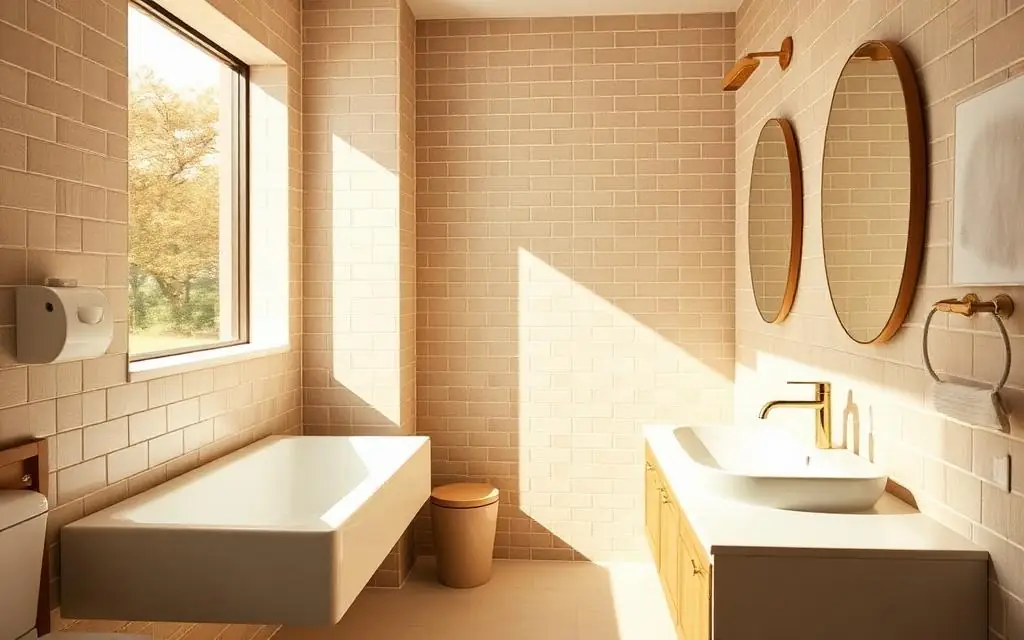
Bathroom renovation pricing is frustrating to research because the honest answer is a range, and the range is wide. A cosmetic refresh in a small powder room and a full gut of a primary ensuite are both called "a bathroom reno," and there's a factor of ten between them.
What follows is how the money actually breaks down, what pushes a quote up, and where homeowners usually find savings without regretting it later. Prices reflect typical Canadian residential work and vary by city, with major metros running noticeably higher than smaller markets.
Three tiers, and what you actually get
A cosmetic refresh, roughly $5,000 to $12,000, keeps every fixture where it is. New vanity, new toilet, new lighting, paint, possibly a tub liner or a reglazed tub, and new flooring over a sound subfloor. No plumbing moves, minimal tile, no permit in most cases. This is the best value renovation available if the layout works and the bones are dry.
A standard full renovation, roughly $15,000 to $28,000, strips the room to studs and rebuilds it. New tile in the shower or tub surround, new waterproofing, new vanity and countertop, new toilet, new fan, updated lighting and electrical, and fresh flooring. Fixtures stay near their existing locations. This is what most homeowners mean when they say "we're redoing the bathroom."
A high-end or reconfigured bathroom, $30,000 to $60,000 and up, moves plumbing, changes the footprint, or adds features like a curbless shower, heated floor, custom glass, freestanding tub, or a double vanity with stone. Structural work and a larger permit scope usually come with it.
Where the money goes
Add it up and you'll see why the middle of the range clusters where it does. Notice also that labour dominates. Tile setting, waterproofing and plumbing are skilled, slow, and the parts of the job you cannot see once it's done, which is exactly why they're the wrong place to cut.
- Demolition and disposal: $800 to $2,000, more if there's asbestos in old tile or pipe wrap.
- Plumbing: $1,500 to $4,000 if fixtures stay put; $4,000 to $9,000 when drains move.
- Electrical: $800 to $3,000 for lighting, a GFCI circuit, fan and any new outlets.
- Tile and waterproofing: $3,000 to $10,000 depending on area, tile size and pattern.
- Vanity, counter and sink: $1,200 to $6,000.
- Toilet: $400 to $1,500 installed.
- Shower glass: $1,200 to $3,500 for frameless.
- Drywall, paint and trim: $1,000 to $2,500.
- Permit and inspections: $250 to $900 depending on municipality and scope.
The plumbing question
Keeping fixtures within a foot or so of their existing locations is the difference between a straightforward job and an expensive one. Moving a toilet means relocating a three-inch drain, which usually means opening the floor and cutting into joists, which sometimes means an engineered fix.
In a two-storey home you also have to open the ceiling below. In a slab-on-grade or basement bathroom, you're breaking concrete. Each of those adds days of labour, a new set of trades, and drywall repair in a room you weren't renovating.
If you're staring at a layout you don't love, price both versions. Sometimes a swapped vanity and a wider shower deliver most of the benefit for a third of the cost of a true reconfiguration.
What older Canadian homes tend to hide
Behind the tile in a house built before the 1990s, contractors commonly find a mortar bed on wire lath, no waterproof membrane, and a subfloor with soft spots around the toilet flange. Cast iron drains may be corroded at the hub. Galvanized supply lines restrict flow and are worth replacing while the wall is open.
Ventilation is another common find. Older bathrooms were often vented into the attic or not at all, which shows up as mould at the ceiling edge. Running a proper duct to the exterior costs a few hundred dollars during a renovation and thousands to correct later.
This is the reason for the contingency. Ten percent is the minimum on a house under thirty years old; fifteen to twenty is realistic on anything older. Money you don't spend is money you keep.
Choices that move the number most
Tile size and pattern change labour more than material cost. Large-format tile needs a flatter substrate and more prep. Herringbone, hexagon and mosaic all cut slower and take longer to lay out. A simple stacked or offset pattern in a mid-size tile is the efficient choice.
Shower niches, benches and curbless entries each add waterproofing detail work. Curbless in particular usually requires recessing the subfloor or building the whole floor up, which is a framing job.
Fixtures span an enormous range. A functional pressure-balanced shower valve and trim runs a few hundred dollars; a thermostatic system with a rain head, hand shower and body sprays can pass three thousand, and it may require upsizing supply lines and confirming your water heater can keep up.
Heated floors add roughly $15 to $25 per square foot installed, including the thermostat and dedicated circuit. In a cold-climate bathroom over an unheated space, most people who install it say it's the feature they'd repeat.
Where homeowners save without regret
Where saving usually backfires: waterproofing, the exhaust fan, the shower valve, and the person setting the tile. Those four determine whether you renovate again in eight years.
- Keep the layout. It's the largest lever available.
- Refinish rather than replace a tub that's structurally fine.
- Choose a stock vanity in a standard width instead of custom cabinetry.
- Use porcelain that mimics stone rather than natural marble, which needs sealing.
- Tile the wet walls fully and paint the rest instead of tiling floor to ceiling everywhere.
- Buy the fixtures yourself during a sale, if your contractor agrees, and confirm who warranties them.
Timeline
A cosmetic refresh takes three to seven working days. A standard full renovation runs two to four weeks of active work, though the calendar time is often longer because of inspection scheduling and material lead times. A reconfigured or high-end bathroom is commonly four to eight weeks.
The most common cause of delay isn't labour, it's back-ordered tile, a custom vanity, or shower glass that can only be measured after the tile is set and then takes two weeks to fabricate. Order early and confirm everything has arrived before demolition starts.
Does it pay back?
A mid-range bathroom renovation is one of the more reliable improvements at resale, generally returning a meaningful share of its cost, though almost never all of it. The bigger effect is that a dated bathroom is a visible objection for buyers, and objections translate into lower offers or a longer listing.
Adding a bathroom where there wasn't one, particularly a second full bath in a three-bedroom home, tends to move value more than upgrading an existing one. Going far above the standard of the neighbourhood usually doesn't.
How to make quotes comparable
Write down the tile you want, the vanity width, the fixture brand and finish, whether the shower gets glass, and whether the layout changes. Hand the same document to each contractor. Ask each quote to separate labour from materials, and to state clearly what is excluded.
Then compare exclusions first. A quote that's four thousand dollars cheaper often turns out to exclude disposal, the permit, the shower glass and the paint, at which point it isn't cheaper at all.
Common questions
A full gut and rebuild of a small three-piece typically runs $14,000 to $22,000 in most Canadian markets, assuming fixtures stay in place and there are no structural surprises.
Usually yes if you're moving plumbing, adding circuits, or altering framing. A like-for-like fixture swap and cosmetic work generally doesn't. Check with your municipality, since the threshold varies.
Many contractors allow it. Agree in advance on who handles a defective or missing part, since that's the friction point. If the contractor supplies it, they usually own the warranty problem and the delay.
Because the labour depends on the tile you choose. Size, pattern, material hardness and the amount of cutting around niches and corners all change how many hours the job takes.