 Proudly Canadian
Signs Your Furnace Needs Service Before Winter
Short cycling, cold rooms and odd smells usually show up early.
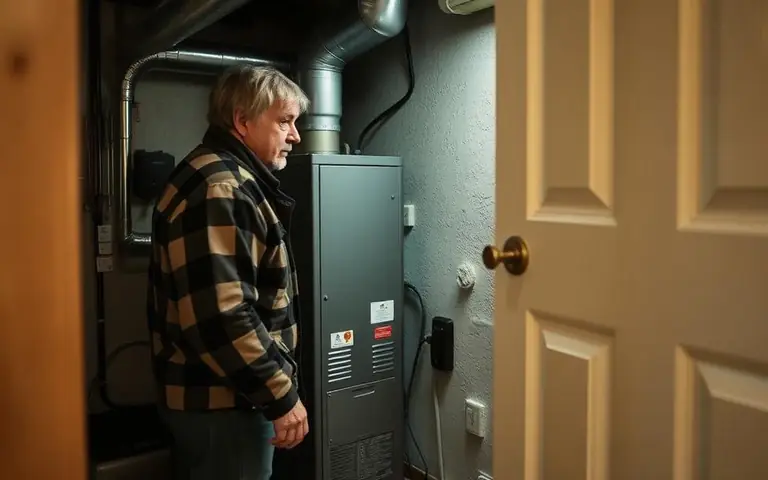
Furnaces rarely fail without warning. They get noisier, they run in short bursts, one room stops keeping up, the bill climbs a little. The problem is that these changes arrive gradually enough that people stop noticing them, right up until the coldest night of the year.
Here's what those symptoms usually mean, which ones are urgent, and how to tell the difference between a furnace that needs a service call and one that's near the end of its life.
Short cycling: turning on and off every few minutes
A furnace should run in reasonably long cycles, ten to fifteen minutes or more in cold weather. If it fires, runs for three or four minutes, shuts down and repeats, something is causing it to overheat or lose its flame signal.
The cheapest cause is a clogged filter restricting airflow, which lets heat build up in the exchanger until the high-limit switch cuts the burner. Change the filter first. If it continues, likely culprits are blocked return air, a failing flame sensor, a dirty burner, or a furnace that was oversized for the house when it was installed.
Short cycling matters because it's hard on the equipment. Ignition and shutdown are the most stressful parts of a cycle, and doing it twenty times an hour ages components quickly.
Rooms that never keep up
If one or two rooms run consistently colder, the furnace itself is often fine. Common causes are a crushed or disconnected duct in the basement or attic, a closed damper, blocked returns, or duct runs that were undersized for a room that got finished later.
Uneven heat across the whole house is different. That points to a blower losing capacity, a badly restricted filter, or a system that's simply undersized for the current insulation levels. A technician can measure static pressure and temperature rise, which tells them quickly whether the airflow or the burner is the problem.
Smells you should not ignore
A brief dusty smell the first time the furnace runs in the fall is normal, it's dust burning off the heat exchanger, and it should clear within an hour.
A sharp electrical or burning-plastic smell is not normal. Shut the furnace off at the switch and call a technician. It usually means an overheating motor, a failing capacitor, or scorched wiring.
A rotten egg or sulphur smell means a gas leak. Leave the house, then call your gas utility's emergency line from outside. Don't flip switches on the way out.
A persistent musty smell when the system runs is usually mould in the ductwork or a plugged condensate drain on a high-efficiency unit.
Noises and what they usually mean
- Banging at startup: delayed ignition, gas building up before it lights. This needs attention.
- Squealing: blower motor bearings or, on older units, a slipping belt.
- Rattling: loose panel or ductwork, generally harmless but worth tightening.
- Grinding: motor bearings failing. Turn it off before the motor seizes.
- Clicking that doesn't lead to ignition: failing igniter or a control board problem.
- Booming through the ducts: expansion and contraction, often a sign of restricted airflow.
The pilot light or flame colour
On an older furnace with a standing pilot, the flame should be steady and blue. Yellow, flickering or lazy flames indicate incomplete combustion, which produces carbon monoxide. Same applies to the burner flames on a newer unit visible through the sight glass.
Incomplete combustion has several causes, a dirty burner, insufficient combustion air, a partially blocked flue, or a cracked heat exchanger. All of them require a technician, and the last one requires replacing the furnace or the exchanger.
Carbon monoxide and the heat exchanger
The heat exchanger is the metal barrier between the combustion gases and the air blown into your house. When it cracks, exhaust including carbon monoxide can enter the living space. It's the reason annual inspections exist.
Symptoms that should prompt an immediate call: a CO alarm sounding, headaches or nausea that improve when you leave the house, soot around the furnace, or visible rust and water pooling near the base of the unit. A technician can inspect the exchanger with a camera and test combustion gases directly.
If you don't have a CO alarm on every level, install them. They cost less than a service call and this is the failure mode that actually hurts people.
Rising bills without a rate change
A furnace losing efficiency shows up on the bill before it shows up as a breakdown. Compare this winter's consumption, not the dollar amount, against the same months in previous years. If usage is climbing while the weather and the thermostat setting are similar, the system is working harder for the same result.
Causes range from trivial to serious: filter, duct leakage, a failing inducer, poor combustion tuning, or an aging unit that's simply drifted from its rated efficiency.
Repair or replace
Most gas furnaces run 15 to 20 years, sometimes longer with good maintenance. Past about fifteen, the calculation changes. A common rule of thumb: if the repair costs more than a third of a new installation and the unit is over twelve years old, replacement usually wins on total cost.
Other factors that push toward replacement: a cracked heat exchanger, a failed control board on an older mid-efficiency unit, parts that are no longer manufactured, or repeated repairs in consecutive seasons.
A new high-efficiency furnace in Canada typically runs $4,500 to $8,000 installed depending on size, venting changes and whether ductwork needs modification. Replacing a mid-efficiency with a condensing unit also means new PVC venting and a condensate drain, which adds to the job.
If you're at the replacement stage anyway, it's worth pricing a cold-climate heat pump with the furnace as backup. Modern units perform well below freezing and provide summer cooling from the same equipment.
What a proper tune-up includes
A tune-up typically costs $130 to $250. If a quote is dramatically lower, ask what's actually being performed, since a filter change and a visual glance isn't an inspection.
- Cleaning and inspecting the burners and flame sensor.
- Inspecting the heat exchanger for cracks or corrosion.
- Checking gas pressure and combustion, measuring flue gases.
- Testing safety controls, limit switches and the pressure switch.
- Cleaning the blower and checking amp draw on the motor.
- Measuring temperature rise and static pressure across the system.
- Clearing the condensate trap and drain on high-efficiency units.
What you can check yourself
Before calling, confirm the thermostat is set to heat and the batteries are good, the furnace switch on the wall or side of the unit is on, the breaker hasn't tripped, the filter isn't grey, the gas valve is open, and the outdoor exhaust and intake pipes aren't blocked by snow or ice. That last one causes a lot of no-heat calls after a storm.
Beyond that, leave it. Gas appliances aren't a DIY category, and in most provinces the work is licensed for good reason.
Common questions
Once a year, ideally in early fall before the heating season. Some manufacturers require documented annual service to keep the warranty valid.
A short burst of cooler air at the start and end of a cycle is normal. Sustained cold air usually means the burner isn't staying lit, often a flame sensor, igniter or gas supply issue.
Typically 15 to 20 years. Maintenance, sizing and how hard the unit had to work all affect where in that range it lands.
For a small repair, sometimes. For anything involving the heat exchanger, blower motor or control board, the money is usually better applied to a replacement that comes with a warranty and lower operating cost.