 Proudly Canadian
How to Tell If Your Roof Needs Repair or Replacement
Shingle age, flashing, attic clues and ice damming damage.
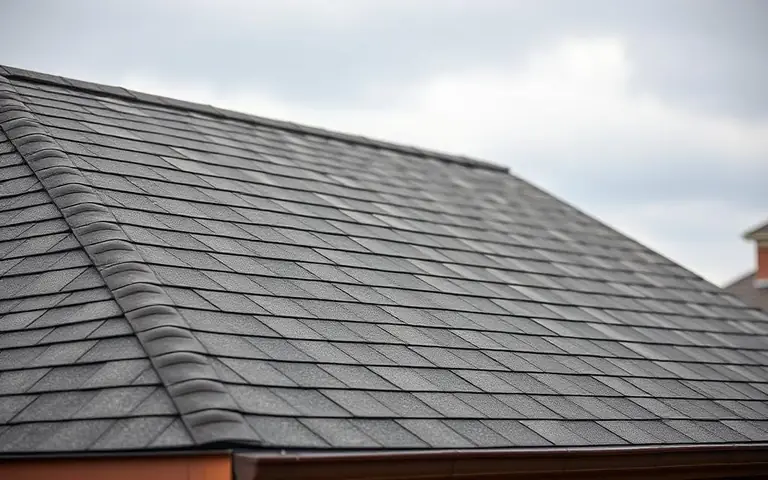
A roof rarely gives you a clean signal. It leaks once during a storm, then doesn't. A few shingles come off and the rest look fine. Someone knocks on the door after a hailstorm and says the whole thing needs replacing.
The useful approach is to look at four things: the age of the roof, the condition of the shingles, the condition of the flashing, and what the attic looks like from underneath. Those together tell you whether you're dealing with a repair or a replacement.
Start with age
Standard three-tab asphalt shingles generally last 15 to 20 years in Canada. Architectural or laminate shingles run 20 to 30. Metal roofing lasts 40 to 70 years. Cedar shakes vary enormously with maintenance, roughly 25 to 40. Freeze-thaw cycling, ice damming, UV in summer and heavy snow loads all shorten these numbers compared to milder climates.
Ventilation matters as much as the shingle itself. A poorly ventilated attic cooks shingles from underneath and can take years off a roof. If a previous roof failed early, ventilation is the first thing to investigate.
If you don't know the age, look for a permit record with your municipality, ask a neighbour whose house was built at the same time, or check whether there are multiple layers of shingles, which itself limits your options.
What to look for from the ground
Binoculars from the yard will show you most of this. There's no need to get on the roof, and walking on aging shingles causes damage.
- Curling or cupping shingle edges, a sign of age and heat.
- Bald patches where the granules have washed off, often visible as darker areas.
- Granules accumulating in gutters or at the bottom of downspouts.
- Missing or lifted shingles, particularly along ridges and edges.
- Sagging in the roof line, which suggests a structural or sheathing problem.
- Moss growth, which holds moisture against the surface.
- Rusted or lifted flashing at chimneys, valleys and vent stacks.
Go into the attic
The attic is where problems appear first. On a bright day, with the lights off, look for daylight coming through the sheathing. Then look for dark staining on the underside of the deck, damp or compressed insulation, rusted nail tips, and any mould at the sheathing edges.
Frost on nail heads in winter usually means warm humid air is escaping into the attic, which is a ventilation and air sealing problem rather than a roofing one. Left alone, it melts and drips and gets diagnosed as a roof leak.
Soft or delaminated sheathing means water has been getting in for a long time. That's a replacement conversation, since new shingles over rotten decking will fail.
Flashing: where leaks actually start
Most roof leaks aren't in the open field of shingles. They're at the transitions: chimney flashing, valleys, plumbing vent boots, skylight perimeters, and where a roof meets a wall.
Rubber vent boots crack with UV exposure, usually around the ten-year mark, and they're inexpensive to replace. Chimney flashing that was surface-caulked instead of properly stepped and counter-flashed will leak eventually no matter how new the shingles are.
The good news is that flashing failures on an otherwise sound roof are genuinely repairable, often for a few hundred dollars. This is the most common case where a homeowner is told they need a new roof and don't.
Ice dams and what they leave behind
In much of Canada, the ice dam is the defining roof problem. Heat escaping into the attic melts snow, meltwater runs to the cold eave and refreezes, and the resulting ridge of ice forces water back up under the shingles.
Signs include water staining on interior walls near the exterior edge, peeling paint at the top of exterior walls, and heavy icicles along the eaves. Repeated ice damming degrades the shingle edge and the fascia.
The permanent fix is attic air sealing and insulation plus proper soffit-to-ridge ventilation. During a re-roof, adding an ice and water membrane along the eaves and in valleys is standard practice and worth confirming is included in any quote.
When repair is the right call
Typical repair costs range from a couple of hundred dollars for a vent boot or a handful of shingles to $1,500 to $3,000 for chimney flashing and a valley rebuild.
- The roof is under about 15 years old and generally in good shape.
- Damage is localized, one slope, one valley, a section of blown-off shingles.
- The problem traces to flashing, a vent boot or a skylight seal.
- The decking underneath is solid.
- Matching shingles are still available, or the affected area isn't highly visible.
When replacement makes more sense
Replacement wins when the roof is near or past its expected life, when granule loss and curling are widespread rather than local, when there are multiple leaks in different areas, when the deck is soft, or when there are already two layers of shingles and code won't allow a third.
The economic argument is straightforward: spending $2,500 patching a 22-year-old roof buys you a few seasons and then you spend the full replacement cost anyway. Spending $2,500 on a 12-year-old roof with a flashing failure buys you a decade.
A full asphalt shingle replacement on a typical Canadian detached home runs roughly $8,000 to $18,000, driven by square footage, roof pitch, number of storeys, complexity of valleys and dormers, and how much decking needs replacing. Metal roofing is commonly two to three times that, with a much longer service life.
What belongs in a roofing quote
Quotes that just say "strip and re-shingle, $11,000" hide exactly the items that determine whether the roof lasts. Ask for the breakdown.
- Tear-off of existing layers and disposal, stated explicitly.
- Deck inspection and a per-sheet price for replacing damaged plywood.
- Ice and water membrane at eaves, valleys and around penetrations.
- Underlayment type across the field.
- New flashing rather than reusing the old, including drip edge.
- Ventilation work, ridge vent or roof vents, and confirmation soffits are open.
- New vent boots and chimney flashing detail.
- Workmanship warranty length, separate from the manufacturer's material warranty.
- Cleanup, including magnetic sweep for nails.
About storm-chasers
After a hailstorm or a windstorm, crews go door to door offering free inspections and insurance help. Some are legitimate. Many aren't local, don't hold provincial registration, and won't exist when a warranty claim comes up in three years.
Get your own inspection from an established local roofer with a verifiable address and references, and let your insurer send an adjuster. Never sign anything that assigns your insurance benefits to a contractor before you understand what it means.
Common questions
Sometimes, if there's only one existing layer and the deck is sound. It's cheaper, but it hides deck problems, adds weight, shortens the new roof's life and prevents proper ice and water membrane installation. Most roofers recommend a full tear-off.
Condensation appears widely across the attic sheathing, often as frost in winter, and is worst on cold mornings. A leak leaves a defined stain that tracks from a specific point and appears during or after rain.
Most detached homes are done in one to three days, weather permitting. Complex roofs, steep pitches or significant deck replacement extend that.
Late spring through early fall is ideal, since shingles need moderate temperatures to seal properly. Roofing in deep cold is possible but requires hand-sealing and is generally avoided.